Do Private Jet Passengers Skip Immigration? How Customs and Passport Control Really Work at Private Terminals (2026)

One question about private jets comes up more than almost any other: "What happens with immigration and customs? Does your passport even get stamped?" In the movies, travelers step out of the car and straight up the airstairs — it looks like passport control and customs simply don't apply.
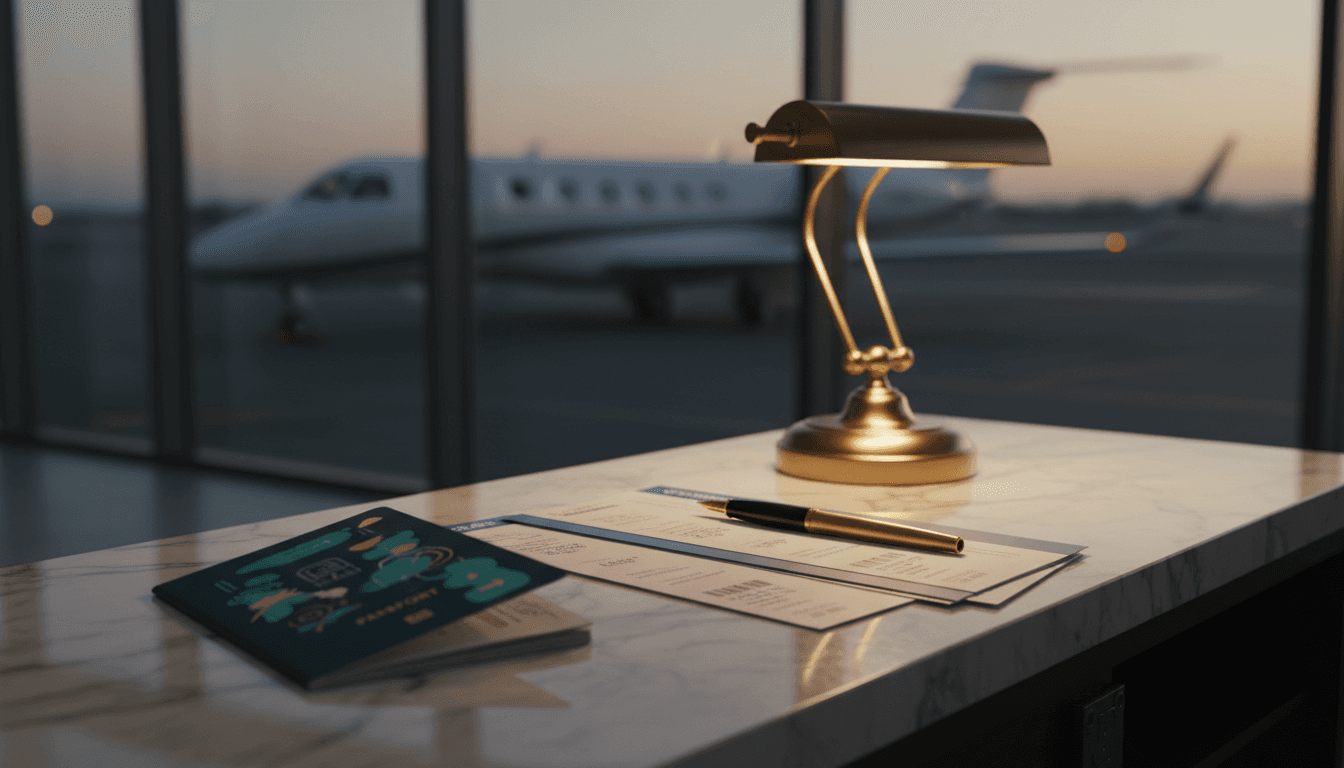
Here's the accurate answer: the procedures don't disappear — they relocate. Passport control, customs and quarantine all happen exactly as the law requires, just as on an airline. What changes is the setting: instead of a terminal queue of hundreds, it's a quiet desk at a private terminal (FBO), or sometimes right in the cabin — and the time collapses from an hour of lines to a few minutes of checks. This guide walks through how private jet immigration actually works — where, how, and how long — from a practical perspective on private jet charter from Korea.
Quick Summary
Topic | Key Point |
|---|---|
The checks themselves | Legally identical to airlines — relocated, not skipped. |
Where | A dedicated desk at the private terminal (FBO); at some airports, onboard. |
How long | No queue — typically minutes (varies by airport). |
Documents | Same passport and visa rules; the ops team files the passenger manifest in advance. |
Customs & quarantine | Same declaration duties — faster, never waived. |
Domestic flights | No immigration at all — why arriving 15 minutes before works. |
Departure — from Car Door to Takeoff
1. Arrive at the private terminal — 30–40 minutes before is plenty
Your car drives straight to the private terminal (FBO) — at Gimpo, the Seoul Gimpo Business Aviation Center (SGBAC); at Incheon, the dedicated business aviation facility. It's a world apart from the main terminal's check-in counters and security lines. See how Korea's airports differ in our Korean airports guide.
2. Security and exit immigration — same screening, no line
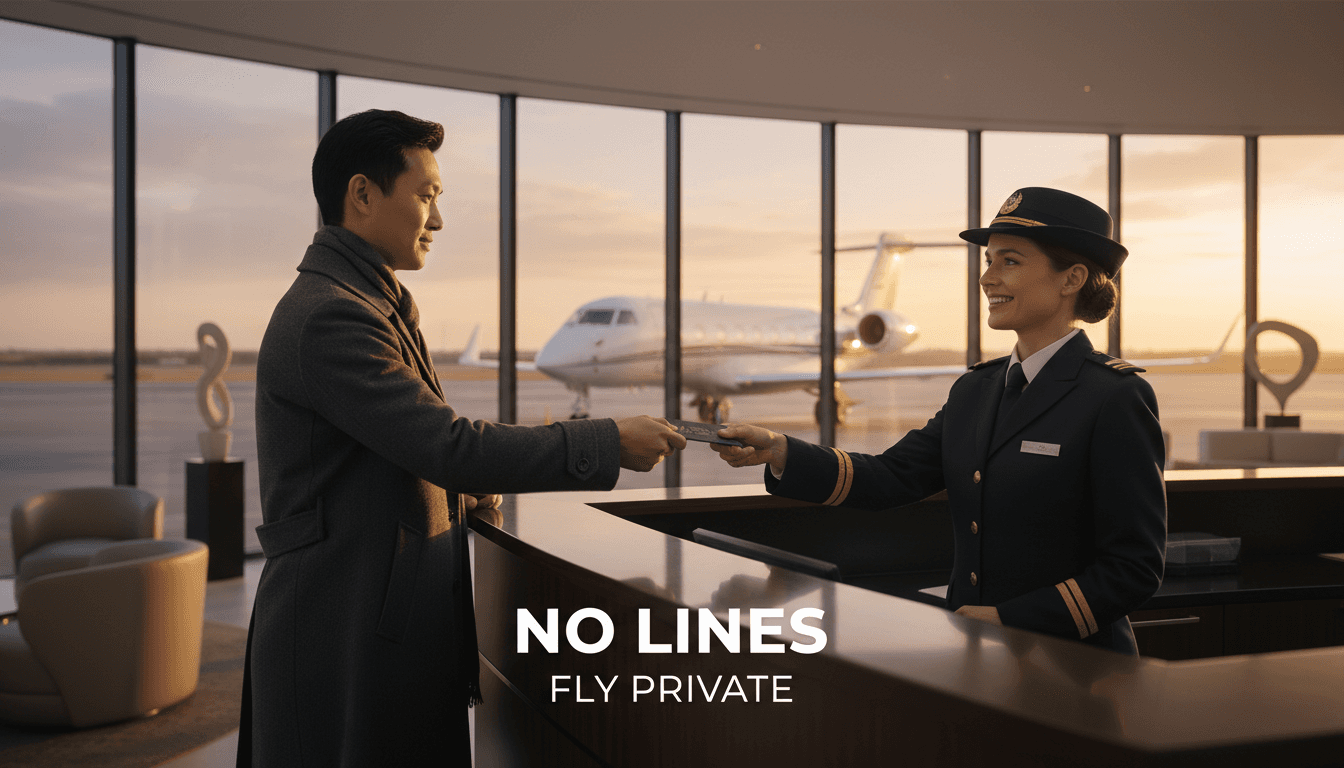
Security screening and passport control run to the same standards, at a dedicated desk. The only difference: no crowd ahead of you. It typically takes minutes, and your passport is stamped (or logged electronically) exactly as on an airline.
3. Boarding — a few steps from the desk to the airstairs
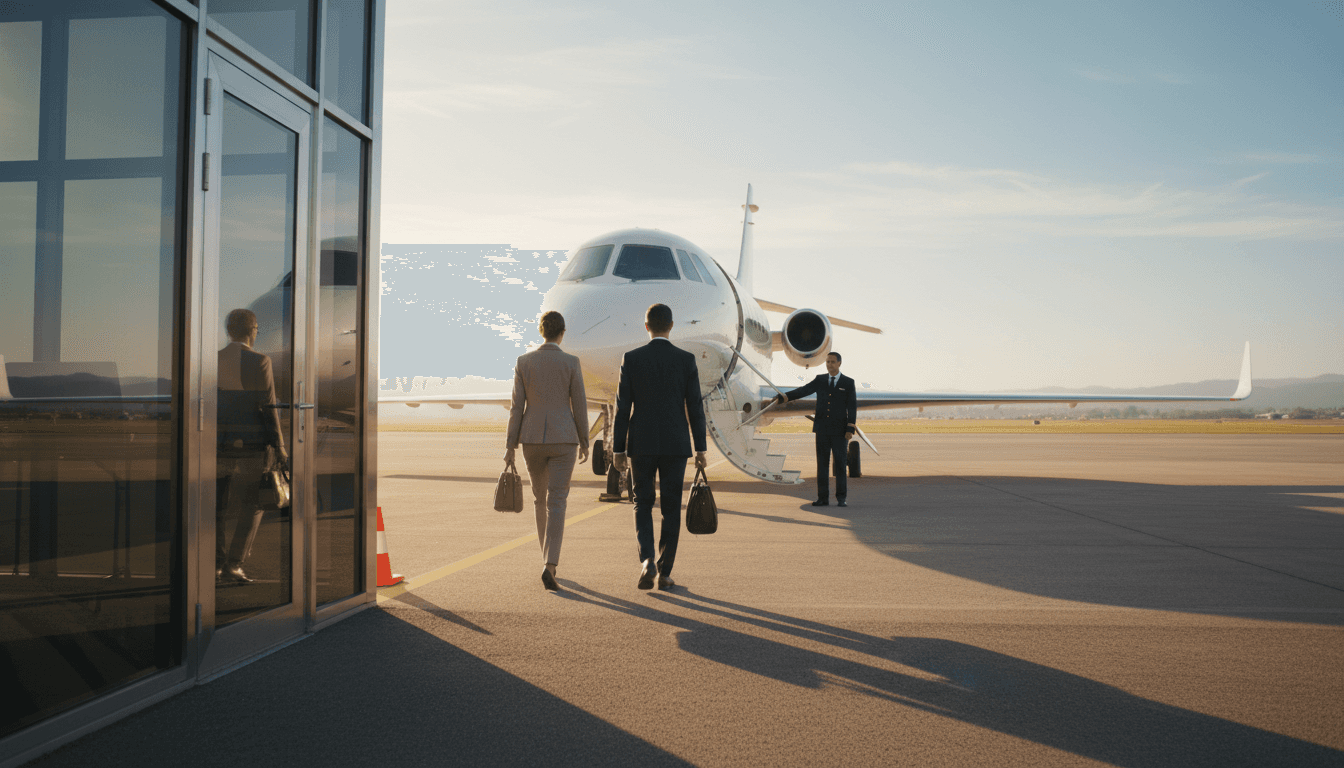
After the checks, you can wait in the lounge — or, if the aircraft is ready, walk straight out to the ramp. At some airports, your car can drive right up beside the jet.
Did you know?
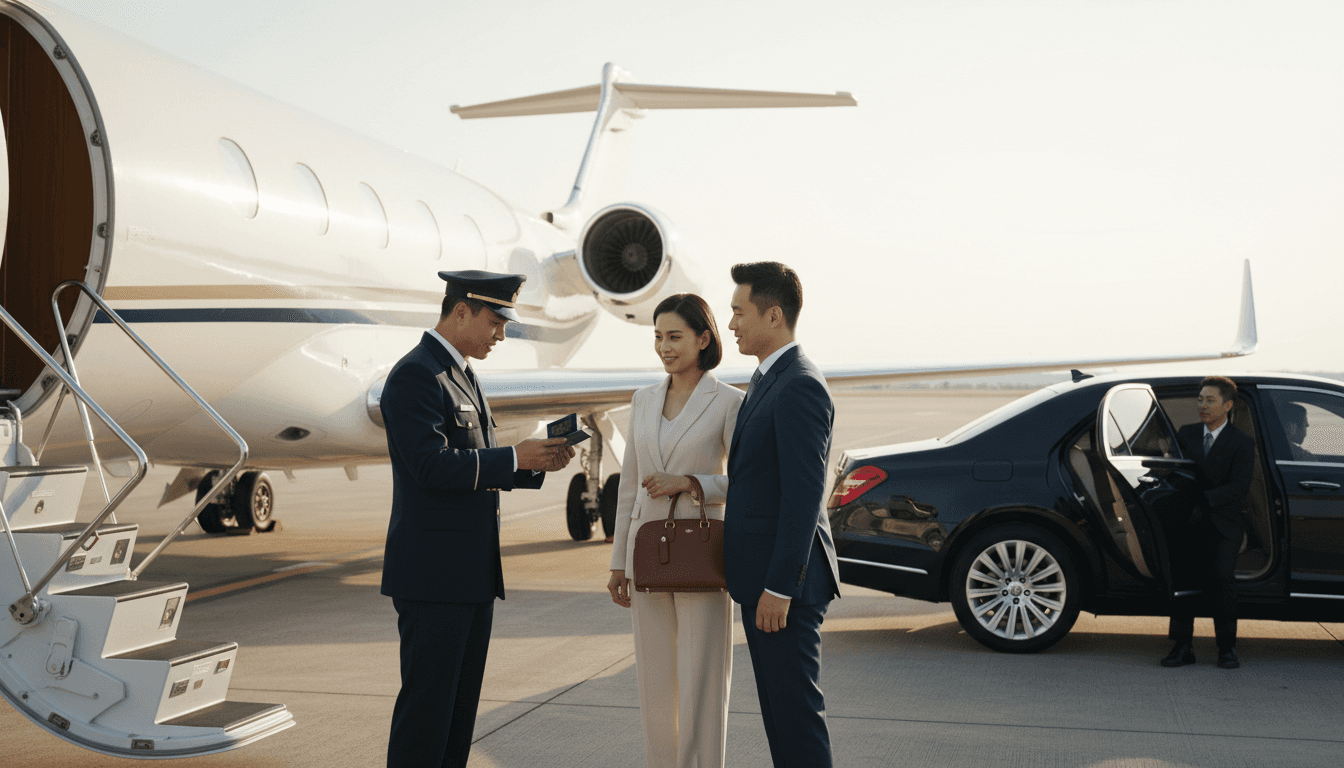
Your passenger manifest is filed with immigration authorities before the flight (APIS — advance passenger information). The real reason the desk check takes minutes isn't that screening is skipped — it's that much of the document work is already done before you fly.
Arrival — Downtown Within 15 Minutes of Landing
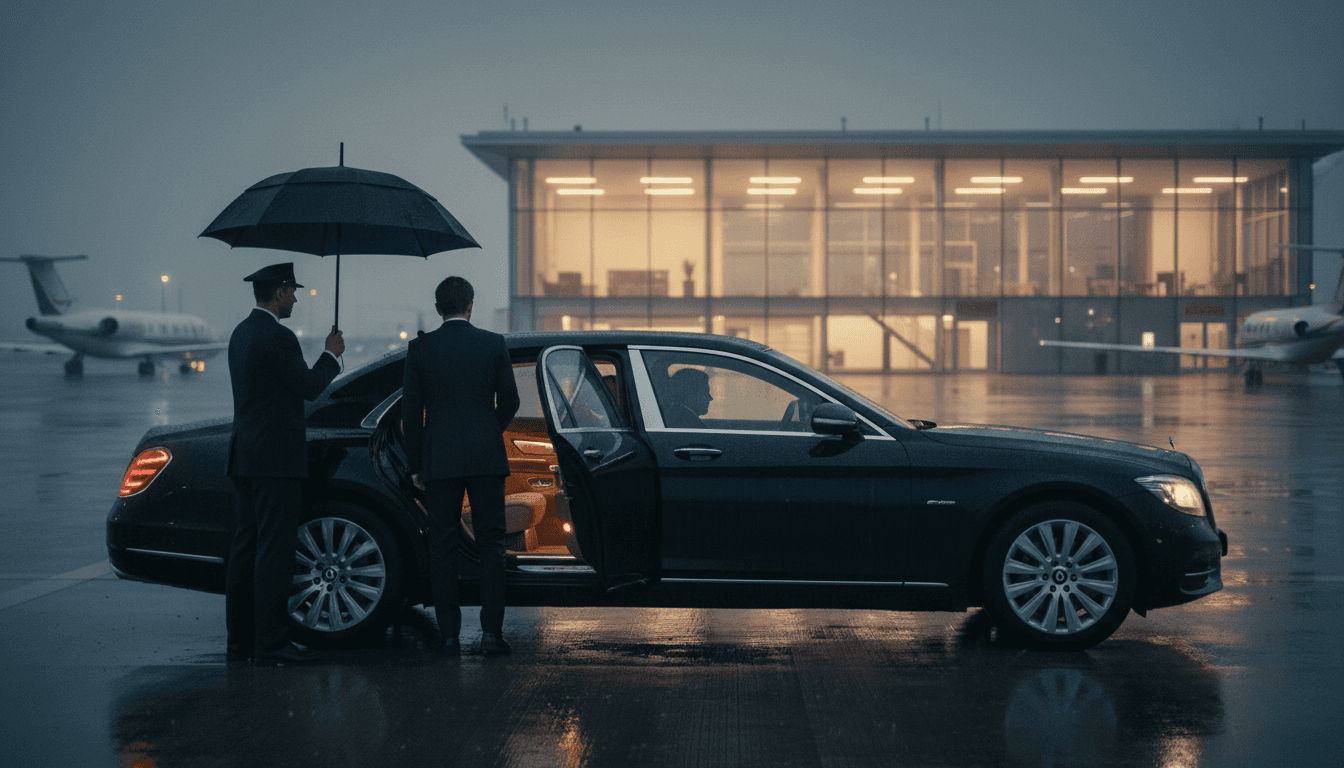
Arrivals mirror the same design. Once the aircraft parks at its stand, an officer either boards the cabin to check passports or you clear at the FBO's dedicated desk, depending on the airport and country. With no baggage carousel to wait for (crew move your bags to the car), you're typically in the chauffeured car heading downtown 15–20 minutes after touchdown — against the hour-plus arrival halls of a widebody airline flight. This is where the difference is felt most.
Airline vs Private Jet — the Border-Process Comparison
How the same international journey differs, step by step. Operations vary by airport and country; your ops team confirms specifics at booking.
Step | Airline (main terminal) | Private Jet (FBO) |
|---|---|---|
Recommended arrival | 2–3 hours before international flights | 30–40 minutes before |
Check-in & bag drop | Counter queues | None — crew take bags to the aircraft |
Security screening | Long waits common | Same standards, minutes at a private lane |
Immigration | Main hall queues | Dedicated desk or onboard check |
Customs & quarantine | Declaration duties apply | Same duties — just faster |
Touchdown to downtown | An hour-plus through arrivals | Typically 15–20 minutes |
The Honest Boundaries — Faster, Never Exempt
Visas are identical — a private jet doesn't create visa-free travel. The destination's visa and travel-authorization rules (ESTA, K-ETA and the like) apply exactly as on airlines.
Customs declarations are identical — duty-free limits, high-value goods and cash-reporting thresholds all still apply. For what you can bring, see our private jet luggage guide.
Quarantine too — food, plant and animal rules are unchanged; traveling with pets is covered in our pet-friendly charter guide.
It varies by country — some airports clear you onboard, most at the FBO desk, and a few require a walk to the main hall. Your ops team confirms the exact flow when the route is set.
Did you know?
Domestic private flights (Seoul–Jeju, for example) involve no immigration at all — just identity and security checks. That's why "arrive 15 minutes before departure" is genuinely possible on domestic charters.
Privacy — the Byproduct Worth More Than the Minutes
The quiet value of private-terminal clearance is invisibility. No departure-hall crowds, no chance cameras, no recognizing glances — for a sensitive executive trip, a public figure's quiet movement, or simply a family's private holiday, the fact that "who flew where" never enters a public flow is often worth more than the time saved. We explore this further in our private jet vs first class comparison.
Three Things to Confirm When Booking
1. The destination airport's clearance style — onboard check or FBO desk, and the arrival flow. Knowing in advance makes the day seamless.
2. When to submit passport details — because of advance manifest filing (APIS), you'll be asked for passport copies after booking. The sooner, the smoother.
3. Anything to declare — high-value goods, alcohol or cash? Discuss with the ops team beforehand. For a quote checklist, see our quote comparison guide.
Frequently Asked Questions (FAQ)
Do private jet passengers skip immigration? No — the checks are identical to airlines. They simply move to a private terminal desk or the cabin, and with no queue they take minutes.
Does your passport get stamped? Yes. Entry and exit records are identical to airline travel (electronic in some countries).
How early should I arrive at the airport? Typically 30–40 minutes before an international departure, and often just 15 minutes for domestic — confirmed per airport and route at booking.
Does a private jet expand visa-free travel? No. Visa and travel-authorization requirements are exactly the same as for airline passengers.
Can I skip customs declarations? No. Declaration duties are identical — the process is faster, never waived.
Conclusion — Same Law, Different Experience
The essence of private jet border-crossing isn't privilege — it's design. The same checks, the same customs, the same law — at your own desk instead of behind hundreds of strangers, on your own timetable. Remove the two airport hours and the whole texture of travel changes. Air Charter Korea is an independent consultancy tied to no single operator — we confirm the clearance flow at both ends of your route and present at least three competing quotes from vetted operators.
Want the door-to-door version of travel, borders included? Reach us below for a tailored quote with the airport process mapped out.
✈️ Request a Private Jet Charter Quote — Air Charter Korea
From car door to downtown — get a door-to-door plan with the immigration flow included, plus a tailored quote.
📞 Wonjin Choi +82-10-7723-3177 | ✉️ contact@aircharterkorea.com
🛬 Incheon Airport VIP Concierge — BestTurn
Flying commercial? Add head-of-state-level immigration escort, lounge and connections as an optional service.
📞 Steve (Team Lead) +82-10-3721-2853 | ✉️ service@bestturnaround.com | See VIP Concierge
Author · Wonjin Choi — Victor x AirCharterService Korea Agent
Profile: LinkedIn | Air Charter Korea Company Page
Published · July 21, 2026