Why South Korea’s Industrial Giants Choose Heavy Lift Cargo Aircraft Rental in 2026
Why South Korea’s Industrial Giants Choose Heavy Lift Cargo Aircraft Rental in 2026
The landscape of global logistics is shifting rapidly as South Korean manufacturers demand unprecedented speed for their most massive components. Did you know that a single ASML EUV lithography system, which is central to South Korea's 2026 chip production, weighs approximately 180 tons and requires three dedicated cargo aircraft for a single delivery?
Key Takeaways
Topic | Insight for 2026 |
|---|---|
Primary Benefit | Bypassing port congestion to meet 2026 production deadlines for semiconductors and EVs. |
Top Aircraft Choice | The Boeing 747-400F remains the industry workhorse for heavy and outsized cargo rentals. |
Cost Management | Fixed hourly rates provide transparency for multi-million dollar logistics budgets. |
Strategic Hub | Incheon International Airport handles nearly half of the regional heavy-lift capacity in early 2026. |
What is the average lead time for a heavy lift aircraft rental in Korea?
As of March 2026, we recommend securing your booking at least one to two weeks in advance to avoid 20% to 35% surcharges for emergency "line-down" situations.
Can private aviation consultants help with cargo logistics?
Yes, firms like Air Charter Korea provide independent consulting to navigate airspace restrictions and secure competitive quotations from global networks.
The Rising Demand for Heavy Lift Logistics in South Korea
In 2026, the South Korean industrial sector is facing a critical juncture where time is more than money (it is the essence of market share). We are seeing a massive surge in the need for specialized transport as semiconductor and automotive manufacturing hits record output levels.
Traditional sea freight often fails to meet the strict timelines required for high-tech factory installations. We focus on bridging this gap by providing aircraft that can handle the sheer weight and volume of industrial machinery without the delays of maritime shipping.
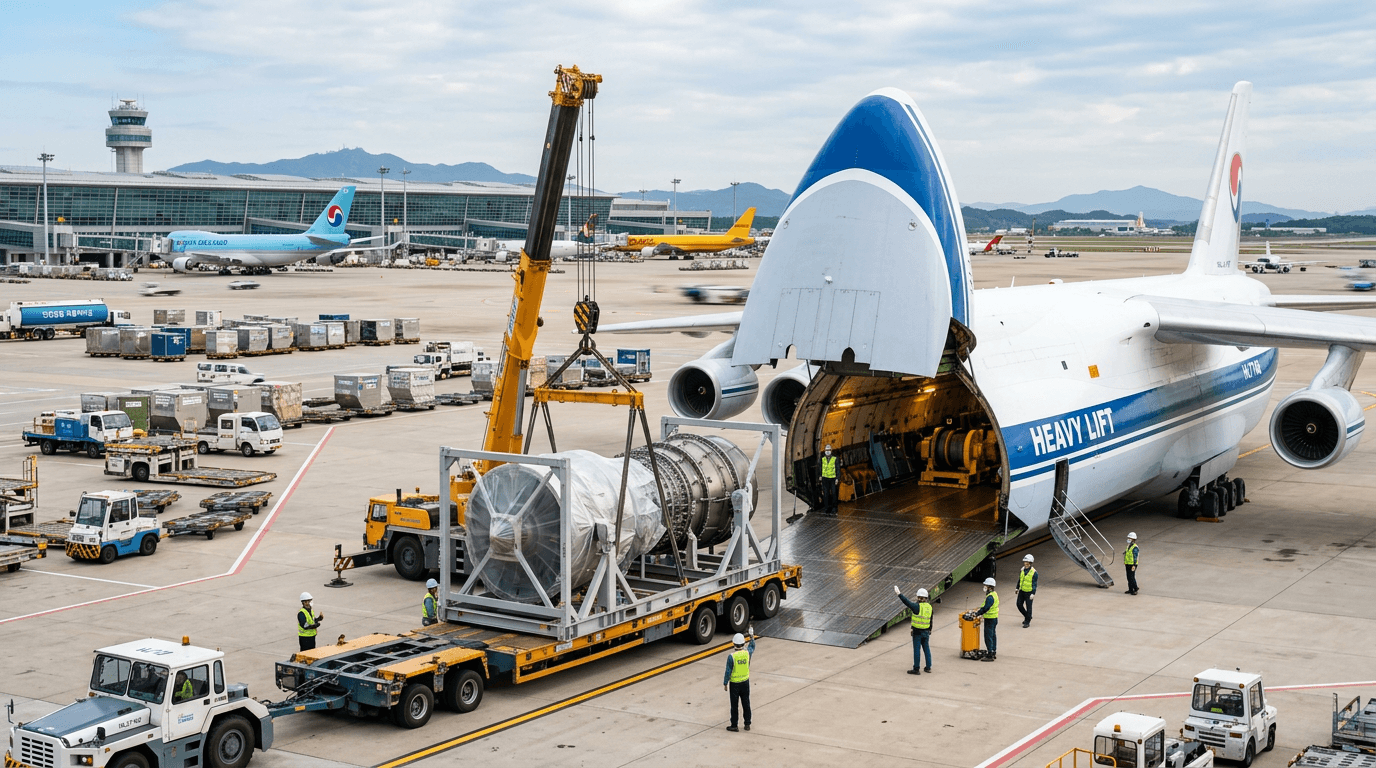
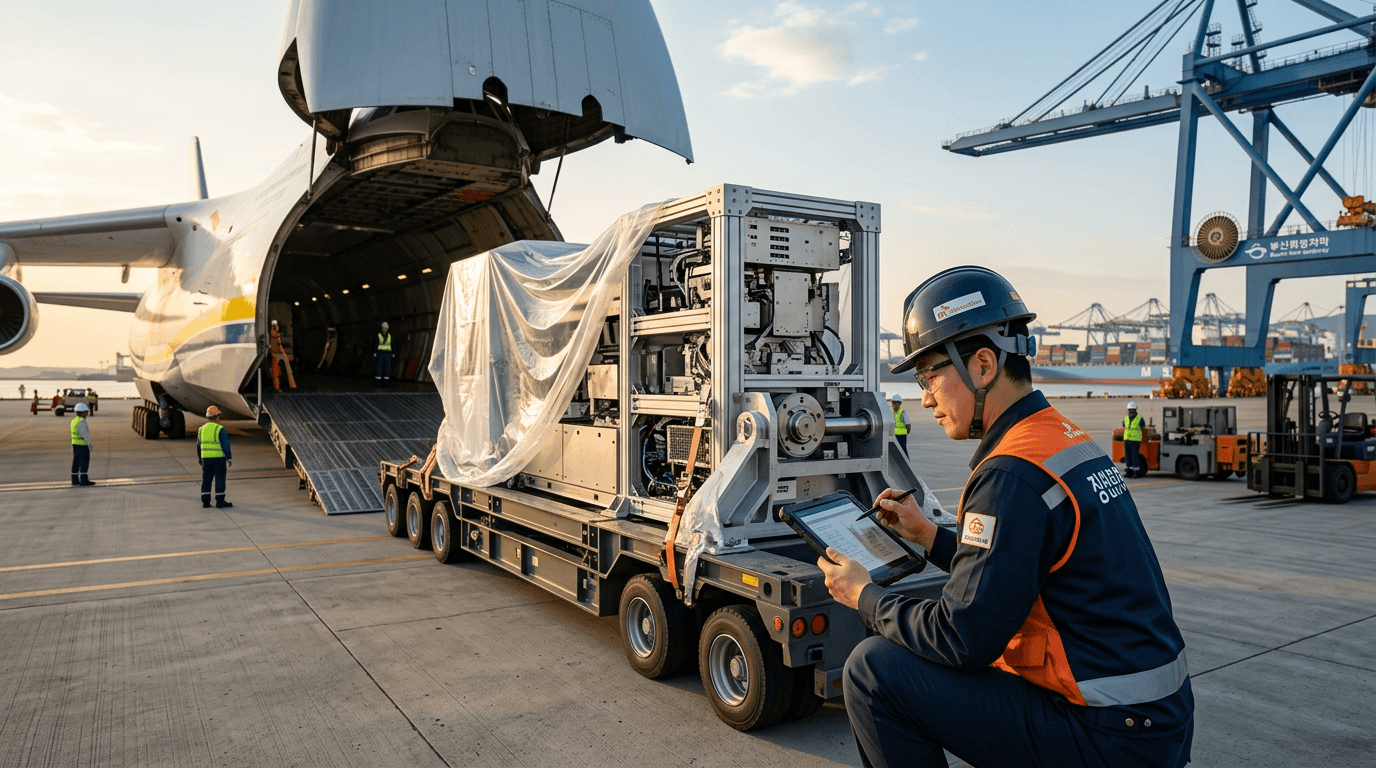
Our role involves coordinating complex movements for items that do not fit in standard containers. These outsized components require the unique nose-loading or ramp-loading capabilities of heavy lift aircraft to ensure safe delivery to Korean soil.
Cost Analysis: Understanding Charter Rates and Operational Expenses
Calculating the cost of a heavy lift rental requires a detailed look at the per hour rates of various airframes. In 2026, prices are influenced by fuel volatility and the scarcity of large-scale freighters capable of intercontinental transit.
A typical heavy lift operation involves not just the flight time but also positioning fees, ground handling, and specialized loading equipment. We help clients navigate these line items to ensure they receive the most competitive market rates available today.
For large-scale projects, we provide comparative data to justify the investment in air charter over slower methods. When a factory line is down, the premium for an immediate flight is negligible compared to the millions of dollars lost in daily productivity.
"The financial impact of a delayed shipment in the semiconductor industry can reach $2 million per hour, making the cost of a dedicated charter a necessary insurance policy for Korean industrial leaders."
Heavy and Outsized Cargo Solutions for High-Tech Manufacturing
South Korea’s export-driven economy relies heavily on the transport of sensitive and massive technology. We specialize in sourcing aircraft with specialized floors and securing systems to prevent any movement of high-value cargo during flight.
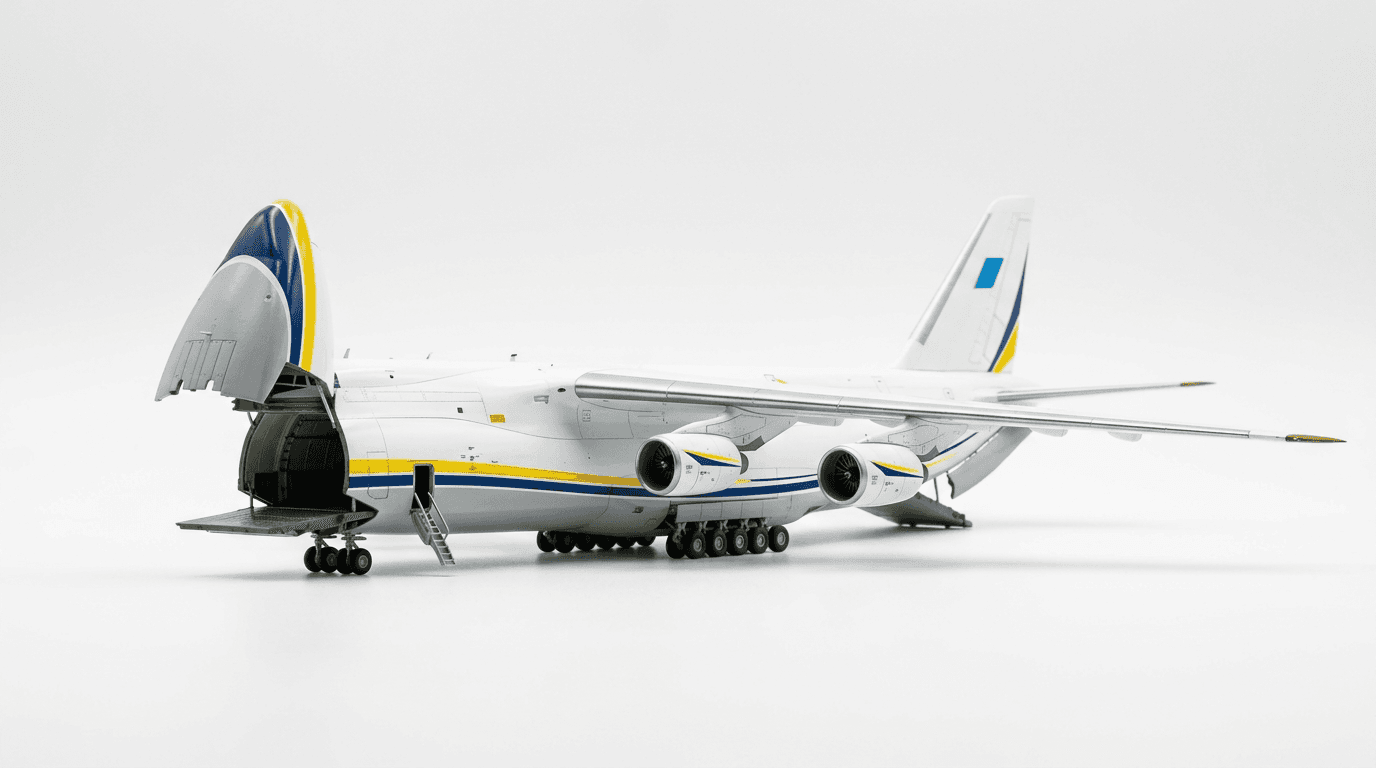
The Boeing 747-8F and the Antonov-124 are the primary vehicles used for these missions in 2026. These aircraft allow for the transport of items such as turbine rotors, fuselage sections, and entire production line modules that cannot be dismantled.
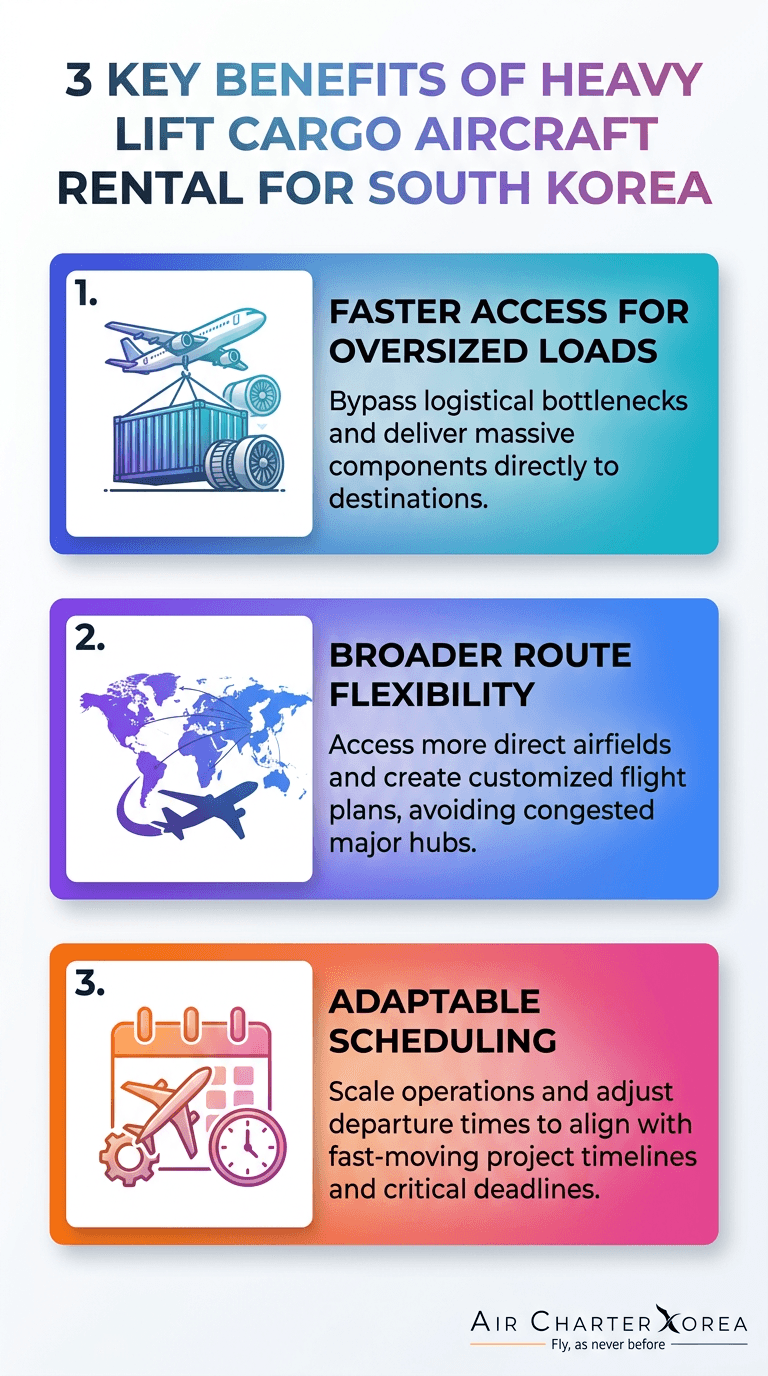
Three key benefits of heavy lift cargo aircraft rental for South Korea are highlighted. The infographic covers faster logistics, greater capacity, and potential cost savings.
We work closely with engineering teams to ensure that the aircraft’s maximum takeoff weight is optimized for the route. This precision planning reduces fuel stops and speeds up the delivery process for our Korean industrial partners.
Air Charter Korea: Your Strategic Partner in Global Logistics
We pride ourselves on being a pioneer in the private aviation era within the Korean Peninsula. Our team understands that the military standoff and airspace restrictions in Korea require a high level of local expertise to navigate effectively.
Did You Know?
Chartering a Boeing 747-400F, the primary workhorse for outsized Korean industrial exports, costs between $42,000 and $50,000 per hour during high-demand periods in 2025-2026.
By leveraging a broad set of international operators, we curate bespoke private flight options for both cargo and corporate needs. We provide at least three quotations for every inquiry to ensure transparency and competitive pricing for our clients.
Our commitment to customer value drives us to seek out the best conditions from multiple partners. We act as an independent broker, which allows us to present the most efficient routes and aircraft for any heavy-lift requirement.
Comparing Heavy Lift Freighters with Private Executive Jets
While our focus is often on heavy cargo, we also assist industrial executives who need to travel alongside their shipments or to remote production sites. In this realm, the gulfstream g650 is frequently requested for its long-range capabilities and high speed.
The g6 airplane for sale market has seen steady growth in 2026 as Korean conglomerates seek to own their own assets for rapid regional travel. Whether you are looking for g6 jets for sale or simply a one-time rental, we offer the consulting necessary to make an informed decision.
Understanding the operational cost per hour for a g6 is vital for corporate budgeting. We provide detailed breakdowns of maintenance, fuel, and crew costs for these ultra-long-range business jets to ensure they align with your logistical strategy.
Gulfstream G650: Best for trans-Pacific executive travel with minimal stops.
Boeing 747F: The industry standard for massive machinery and high-volume industrial exports.
Consulting Services: We help you choose between owning or renting based on your 2026 flight frequency.
The Role of Incheon International Airport as a Heavy Lift Hub
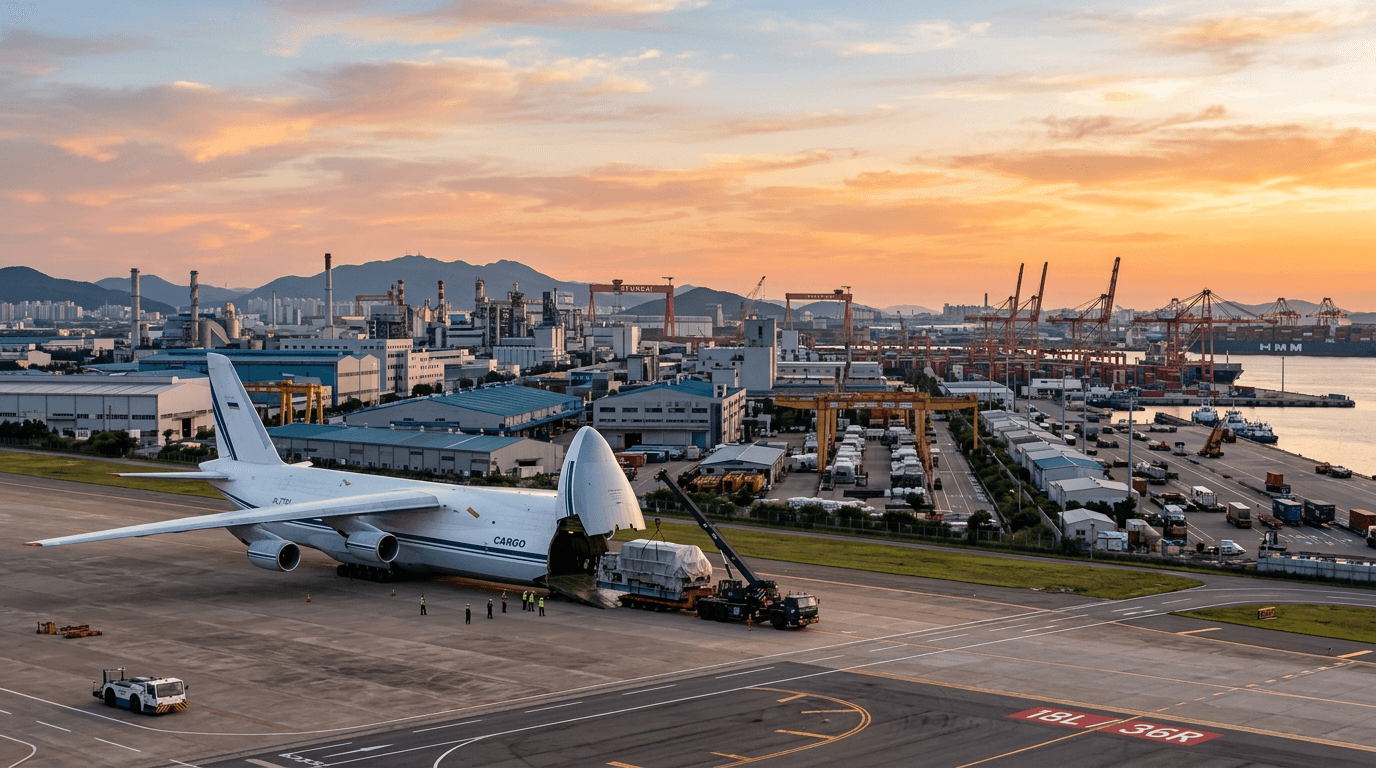
Incheon International Airport has solidified its position in 2026 as the premier heavy-lift hub for Northeast Asia. The airport’s infrastructure is specifically designed to handle the 7-hour "Ready for Carriage" cut-off enforced by major carriers like Emirates SkyCargo.
We utilize Incheon’s advanced cargo terminals to facilitate the rapid movement of goods from the ground to the aircraft. This hub concentration allows us to source aircraft more quickly as they are often already positioned within the region.
Congestion at Incheon can occasionally drive up spot rates by 15-20%. We mitigate this by planning flights during off-peak windows or utilizing secondary airports when the cargo dimensions allow for it.
Emergency Rapid Deployment: Minimizing Production Downtime
Emergency rentals are a cornerstone of our service for the automotive and electronics sectors in 2026. When a supply chain break occurs, we can often secure a heavy-lift aircraft and have it airborne within hours.
The 20% to 35% premium for short-notice charters is a calculated risk that many Korean firms take to keep their global operations running. We manage the entire process, including the complex paperwork and customs clearances required for rapid entry.
Our network of global partners ensures that we can find an aircraft even when local capacity is fully booked. We prioritize "line-down" situations to protect the economic stability of our clients' production schedules.
Did You Know?
As of January 2026, shippers in South Korea are advised to secure heavy equipment air cargo bookings at least one week in advance due to critical space constraints on Intra-Asia lanes.
Regulatory Landscape and Airspace Restrictions in Korea
Navigating the airspace around the Korean Peninsula remains a unique challenge in 2026. The military standoff requires specific flight paths and permits that differ significantly from other international hubs.
We work directly with the relevant authorities to ensure all heavy-lift flights comply with local safety and security protocols. Our expertise in this area is why many international firms choose us for their about us inquiries regarding Korean operations.
As the market evolves, we stay at the forefront of regulatory changes that could allow for greater civilian access to restricted zones. This proactive approach ensures that our clients’ cargo is never delayed by preventable bureaucratic hurdles.
Global Partner Networks and Bespoke Flight Consulting
Success in heavy-lift cargo rental depends on the strength of one’s network. We have spent years building relationships with operators around the globe to ensure we can provide diverse and competitive products.
Our consulting process begins with a deep dive into the specific requirements of your cargo. We consider weight, dimensions, fragility, and the urgency of the delivery to recommend the most cost-effective solution.
We invite you to contact our team to discuss your upcoming logistics projects. Whether it is a single engine or a fleet of machinery, we have the tools and connections to move it safely and efficiently.
Future Trends: Urban Air Mobility and Sustainable Heavy Cargo
Looking toward the end of 2026 and beyond, we are monitoring the development of Urban Air Mobility (UAM). These environmentally friendly technologies could revolutionize how smaller but heavy components are moved within Korean cities.
Sustainability is also becoming a major factor in aircraft selection. We are seeing more clients inquire about the fuel efficiency of newer freighters and the availability of sustainable aviation fuel for their charter flights.
While the Boeing 747 still dominates the heavy-lift market, the transition to more efficient twin-engine freighters is underway. We are prepared to lead our clients through this transition, ensuring they always have access to the latest aviation technology.
Conclusion
Heavy lift cargo aircraft rental is no longer just a logistics choice for South Korean industry in 2026; it is a strategic necessity. As we have seen, the ability to move massive, high-value components quickly can make or break a company’s production goals. By understanding the cost per hour, navigating regulatory challenges, and leveraging global networks, we provide the freedom and flexibility that modern industry demands. Whether you are transporting semiconductor machinery or looking into g6 jets for sale for your executive team, our comprehensive consulting ensures your assets arrive exactly when and where they are needed most.