The Best-Selling Business Aircraft in History — The 2026 Beechcraft King Air Charter Guide: Cheaper Than a Jet, Lands Where Jets Can't

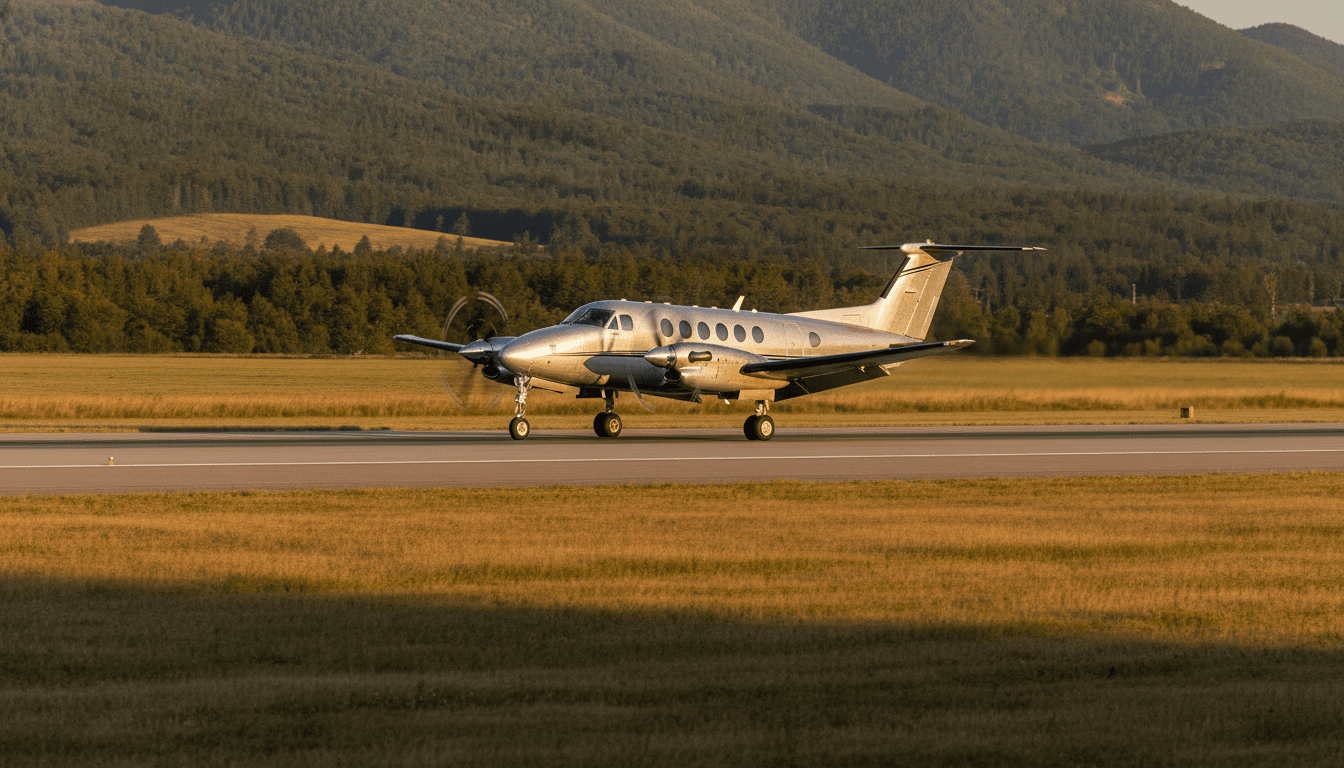
Most people researching private aviation start with jets. Yet the best-selling business aircraft in history isn't a jet at all. First flown in 1964 and still in production more than sixty years later, the Beechcraft King Air is a twin-engine turboprop with over 7,000 delivered — the most widely used business aircraft in the world, flying everything from executive shuttles to government missions and air ambulances.
In an age of jets, a propeller aircraft surviving six decades takes some explaining. The reason is simple: it lands where jets can't, and flies for less than jets do. This guide covers what the King Air is, when it beats a jet and when it plainly doesn't — honest limits included — from a practical private jet charter perspective.

Quick Summary
Topic | Key Point |
|---|---|
What it is | Debuted 1964, still built today — the best-selling business aircraft ever (twin turboprop). |
Current models | King Air 260, King Air 360 / 360ER — typically 6–9 seats. |
Strengths | Short and unpaved runway access, lower hourly cost than jets, proven reliability. |
Honest limits | Slower, lower cruise altitude — jets win on long range and weather avoidance. |
Sweet spot | 1–2 hour domestic and regional legs, small airports, frequent trips, medevac. |
Booking | Air Charter Korea sources competing quotes matched to your route. |
Why It Survived Sixty Years — the Turboprop Case
A turboprop uses a jet engine to turn a propeller. The propeller looks old-fashioned; the machinery behind it isn't — and over short distances the configuration is genuinely superior.
1. It lands on short runways
Propellers generate strong thrust at low speed, which means short takeoff and landing distances. That opens regional airports, short strips and imperfect surfaces that jets simply cannot use — flying you to the airfield nearest your destination rather than the nearest one that takes jets. It's why the King Air became the standard in mountainous, island and remote operations worldwide.
2. The cost structure is different
Lower fuel burn and operating costs than a comparable jet translate into a lower hourly rate. For companies flying short legs frequently, that gap compounds across a year. Estimate a range with our private jet cost calculator; exact figures are confirmed at quote stage.
3. Over short legs, the time difference is smaller than you think
Jets are far faster — but on legs of roughly an hour, actual arrival times converge more than the cruise speeds suggest, because climb, cruise and descent proportions dominate. Meanwhile the King Air's runway options are wider, so landing closer to where you're actually going often cancels out the speed deficit.

The Line-Up — 260 and 360
The current family splits in two. Seating and range vary with configuration and load, confirmed at quote stage.
Model | Character | Best for |
|---|---|---|
King Air 260 | Compact standard, efficiency-focused | Short executive hops, regional round trips |
King Air 360 | Larger cabin, flagship of the family | Bigger teams, longer time onboard |
King Air 360ER | Extended Range variant | Long endurance, special missions, over-water legs |
When a King Air Is the Right Answer — and When It Isn't
This section is the point of the article. Brochures list strengths; what matters operationally is the boundary.
Where the King Air wins
1–2 hour domestic and regional legs — the speed gap is small in practice; the cost gap isn't.
Small airports and short runways — sometimes a jet simply cannot get in at all.
High-frequency corporate travel — per-trip savings compound annually.
Medical transport and special missions — low-speed stability and runway flexibility make it the world's signature air-ambulance platform. See our medical evacuation guide.
Where a jet is better — honestly
Legs beyond two hours — the speed advantage compounds with distance and jets pull clearly ahead.
International long-haul — Europe and the Americas aren't in scope.
Schedules where weather avoidance matters — a lower cruise altitude leaves less room to fly above systems. See our weather-risk guide.
Occasions where cabin impression counts — jets lead on cabin size and presentation.
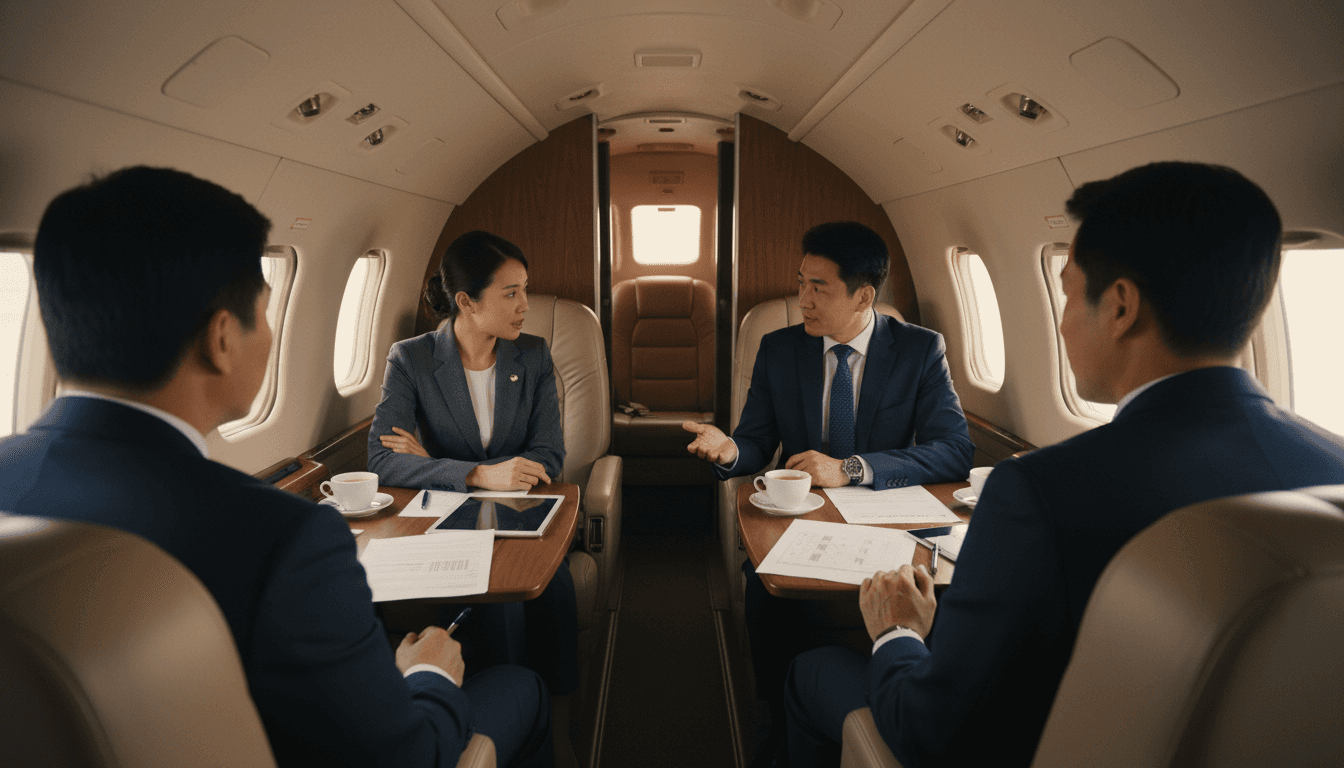
King Air vs Light Jet vs Single-Engine Turboprop
Factor | King Air (twin turboprop) | Light jet | Single turboprop |
|---|---|---|---|
Speed | Moderate | Fast | Slower |
Runway flexibility | Very high | Moderate | Very high |
Engines | 2 (twin margin) | 2 | 1 |
Hourly cost | Low–moderate | Moderate | Lowest |
Representative | King Air 260 / 360 |
Did you know?
Behind sixty years of production and 7,000-plus deliveries sits one design choice: a twin turboprop. Two engines give operational margin a single lacks; propellers reach runways jets can't. It trades a little speed for access, cost and redundancy — and that balance has held for more than half a century.
Where It Fits in Korea
On domestic routes the King Air's role is clear: regional legs from Seoul including Jeju, small-city airports near industrial sites, and island access — places where scheduled service runs a few times a day or not at all, reached on the day and hour you need. Airport-by-airport conditions are in our Korean airports guide, and the wider fleet map is in the aircraft class guide.
What to Confirm When Chartering
1. Destination runway conditions — runway flexibility is the King Air's whole advantage; naming the destination narrows the aircraft choice immediately.
2. Passengers and luggage — typically 6–9 seats; heavy loads mean checking cabin and compartment together (luggage guide).
3. Leg length — beyond two hours, ask for a light jet quote alongside and compare.
4. Operator safety rating — the operator matters more than the aircraft type (safety guide).
Frequently Asked Questions (FAQ)
Is the King Air a jet? No — it's a twin turboprop, using jet engines to drive propellers. Slower than a jet, but stronger on short-runway access and operating cost.
Why has it stayed in production for 60 years? A design balance that trades some speed for runway access, cost and reliability. Over 7,000 delivered — the best-selling business aircraft in history.
How many passengers does it carry? Typically 6–9 depending on model and configuration, confirmed at quote stage.
Is it cheaper than a jet? Hourly rates generally sit below comparable jets. On longer legs the extra flight time narrows the gap, so compare per route.
Can it fly international routes? Some short regional ones, yes — but long-haul belongs to jets. Past about two hours, evaluate a light jet or larger.
Conclusion — Not the Flashiest. The Most Chosen.
The King Air isn't the fastest aircraft, or the most glamorous. It is the most chosen — because it reaches runways jets can't, flies for less, and has kept doing both for six decades. If your route is a 1–2 hour regional leg into a smaller airport, it deserves consideration before any jet. Air Charter Korea is an independent consultancy tied to no single operator — we verify route and runway conditions and present at least three competing quotes from vetted operators.
Have a regional airport on your itinerary? Reach us below for a quote comparing King Air and light-jet options side by side.
✈️ Request a Private Jet Charter Quote — Air Charter Korea
King Air or light jet? We compare both against your actual route and send a tailored quote.
📞 Wonjin Choi +82-10-7723-3177 | ✉️ contact@aircharterkorea.com
🛬 Incheon Airport VIP Concierge — BestTurn
From pre-departure concierge and lounge to onward connections — head-of-state-level service (optional add-on).
📞 Steve (Team Lead) +82-10-3721-2853 | ✉️ service@bestturnaround.com | See VIP Concierge
Author · Wonjin Choi — Former Korean Air Business Jet Operations Manager · Former Samsung Electronics Business Jet Account Manager
Profile: LinkedIn | Air Charter Korea Company Page
Published · July 29, 2026