Private Jet Classes Compared: Light to Ultra-Long-Range

Private Jet Classes Explained 2026: Light Jets to Ultra-Long-Range — Hourly Rates, Capacity, Range & Best Routes
The first and biggest decision in any private jet charter is which class of aircraft to fly. On the very same Seoul–Tokyo leg, a light jet and a heavy jet can differ in cost by more than two to one — and on the same budget, the wrong class can leave you short on the range or seats you actually need. This guide lays out all five classes — from the light jet to the ultra-long-range jet — by capacity, range, cruise speed, hourly rate, representative aircraft, and best routes. It's a practical catalog for anyone planning a private jet charter.

Key Takeaways
The table below sums up the five private jet classes at a glance. All figures are approximate at 2026 market levels; real-world performance and rates vary with configuration and operating conditions.
Class | Capacity (approx.) | Hourly Rate (approx.) | Signature Routes |
|---|---|---|---|
Light Jet | 5–7 | $3,000–$5,500 | Seoul–Jeju/Tokyo/Beijing |
Midsize | 7–9 | $5,000–$8,000 | Seoul–Shanghai/Hong Kong/Taipei |
Super-Midsize | 8–10 | $7,000–$11,000 | Seoul–Singapore/Bangkok |
Heavy Jet | 10–16 | $9,000–$15,000 | Seoul–Dubai/Sydney |
Ultra-Long-Range | 12–19 | $13,000–$20,000 | Seoul–New York/London/LA |
Why Aircraft Class Matters
Where commercial air splits into seat classes — economy, business, first — private aviation is defined by the class of the aircraft itself. Class is not just about size: it sets capacity, range, cruise speed, cabin height, baggage volume, and hourly rate all at once. A common mistake among those new to private jet charter is choosing a jet too small to cover the distance — forcing a fuel stop — or, conversely, chartering an oversized jet for a short hop and paying for capability they never use.
The right class is cost optimization. Match the class precisely to your party size, distance, baggage, and runway conditions, and you fly the same mission for a more sensible price. For the decision framework behind picking an aircraft, see our guide to choosing the right jet for business travel.
Did You Know?
On the same Seoul–Tokyo leg, charter cost can differ by more than two to one between a light jet and a heavy jet. Simply matching the class to the mission can cut cost substantially.
A Class-by-Class Guide
1. Light Jet — The Short-Haul, Small-Group Standard
The light jet seats 5–7 and is optimized for flights of about 2–3 hours. Representative aircraft include the Embraer Phenom 300 and the Cessna Citation CJ series, and their short-runway capability gives them excellent airport access. They are the most economical choice for close routes like Seoul–Jeju, Seoul–Tokyo, and Seoul–Beijing, or small executive trips. For pricing and first-booking tips, see our light jet price and first-booking guide.
2. Midsize Jet — The Balanced Class
The midsize jet seats 7–9 with a strong balance of cabin space and range, making it the workhorse across Korea, China, Japan, and the rest of East Asia. The Cessna Citation XLS and Bombardier Learjet 75 are representative, well suited to Seoul–Shanghai, Seoul–Hong Kong, and Seoul–Taipei. Near-standing cabin height and ample baggage space keep half-day-plus business itineraries comfortable.
3. Super-Midsize Jet — The Long-Haul Entry Point
The super-midsize jet seats 8–10 and flies intra-continental long legs nonstop. The Bombardier Challenger 350, Cessna Citation Longitude, and Embraer Praetor 600 are representative, fitting Seoul–Singapore, Seoul–Bangkok, and Seoul–Delhi. A wide cabin and fast cruise make it strong for team travel where you must be ready to work on arrival.
4. Heavy Jet — Large Cabin and Long Range
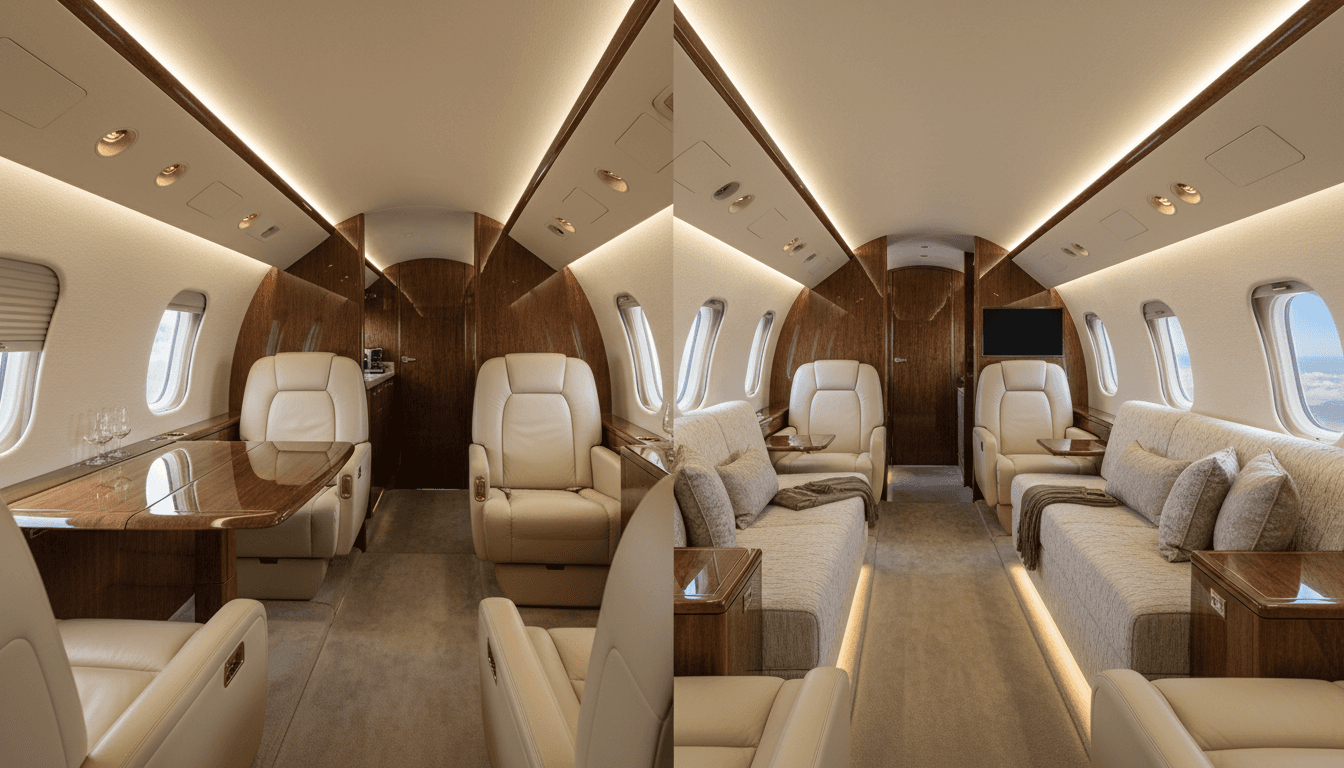
The heavy jet seats 10–16 with a wide cabin and long range. The Bombardier Challenger 650 and Dassault Falcon 2000 are representative, fitting medium-to-long international routes and larger parties such as Seoul–Dubai and Seoul–Sydney. Fully flat seating and separate zones greatly reduce fatigue on long flights.
5. Ultra-Long-Range Jet — The Intercontinental Flagship
The ultra-long-range jet seats 12–19 and flies more than 6,000 nautical miles on a single tank. The Gulfstream G650ER, Bombardier Global 7500, and Dassault Falcon 8X link Seoul to New York, London, and Los Angeles nonstop. Pair this with our complete guide to routes from Seoul for the full picture.
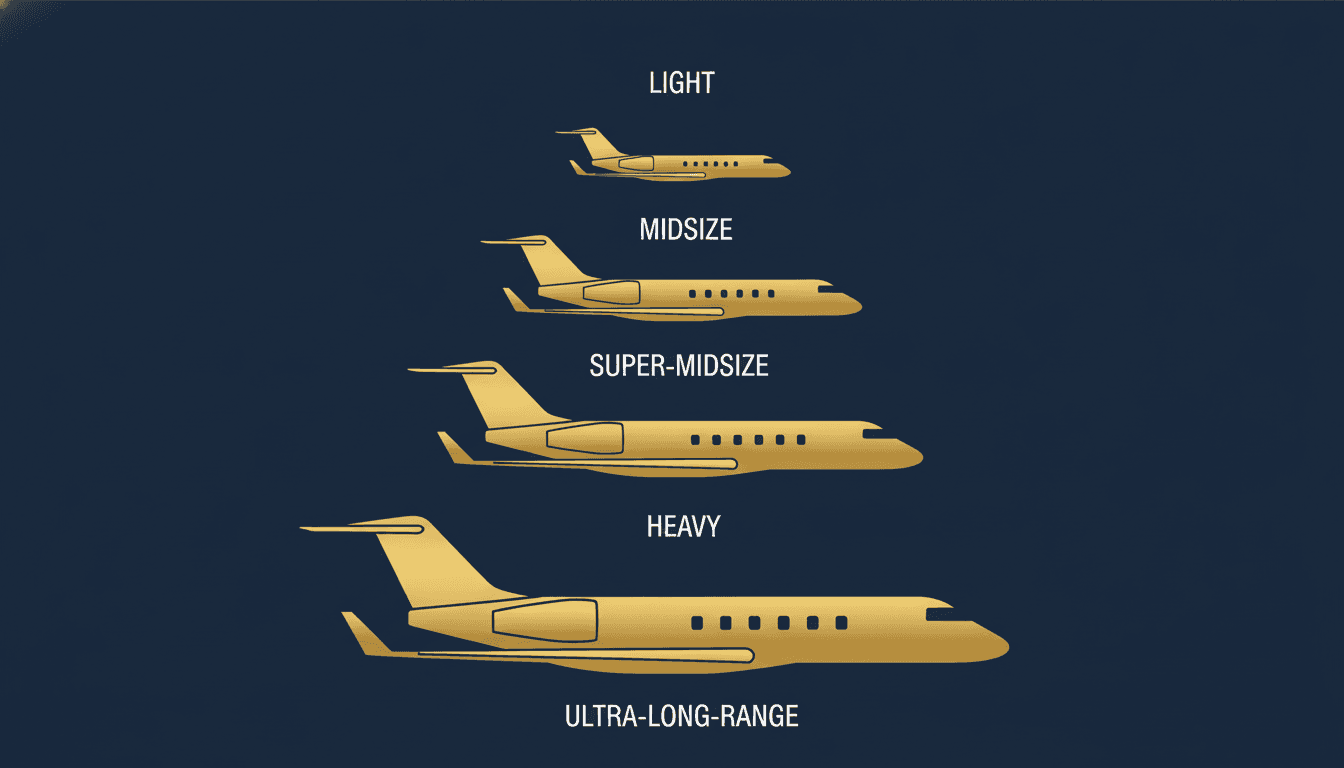
The Comparison Table — At a Glance
The table below lays out all five classes by capacity, range, cruise speed, and representative aircraft.
Class | Capacity (approx.) | Range (approx.) | Cruise (approx.) | Representative Aircraft |
|---|---|---|---|---|
Light Jet | 5–7 | 1,800 nm | Mach 0.74 | Phenom 300, Citation CJ |
Midsize | 7–9 | 2,800 nm | Mach 0.78 | Citation XLS, Learjet 75 |
Super-Midsize | 8–10 | 3,500 nm | Mach 0.83 | Challenger 350, Praetor 600 |
Heavy Jet | 10–16 | 4,000 nm | Mach 0.85 | Challenger 650, Falcon 2000 |
Ultra-Long-Range | 12–19 | 7,000 nm+ | Mach 0.90+ | G650ER, Global 7500 |
What Drives Cost Beyond the Hourly Rate
The class hourly rate is only the starting point; the final cost is shaped by several factors. To read a quote accurately, know these line items.
Positioning (ferry) cost: If the aircraft must fly to your departure airport, that empty repositioning leg is added.
Wait and overnight cost: If the aircraft stands by locally or the crew overnights, related charges apply.
Landing and handling fees: These vary by airport, along with parking fees.
Peak season and time of day: Rates can rise during high-demand periods and slots.
Taxes and surcharges: VAT and overflight fees may be added depending on the route.
That's why quotes for the same class can differ between providers. How to compare quotes transparently and spot hidden items is covered in our quote comparison transparency guide. If you fly the same route often, a jet card membership that locks in your hourly rate helps keep the budget predictable.
How to Choose the Right Class for Your Mission
Class selection comes down to three questions.
How many are traveling?
Four or fewer points to light–midsize; teams of eight or more to heavy–ultra-long-range.
How far are you going?
Domestic and East Asia: light–midsize. Southeast and South Asia: super-midsize. Middle East and Australia: heavy. The Americas and Europe: ultra-long-range.
What will you do on board?
For simple transit, a smaller class is plenty; for a long-haul team mission that needs separate space for meetings, sleep, and rest, the wide cabin of a higher class is the answer.
As an independent consultancy unbound by any single carrier, ACK recommends the class that best fits your party, route, and budget objectively, and presents at least three competing quotes. If it's your first time, our 5-step booking process guide walks through the whole flow.
Completing the Journey — VIP Meet-and-Greet at Incheon
Whatever class you choose, the final impression is made on arrival. Returning to Incheon from abroad, long immigration lines and baggage waits only add fatigue. Adding BestTurn VIP airport meet-and-greet puts a dedicated team in charge of immigration, baggage, and the vehicle handover, so the journey from cabin door to car never breaks. The specifics are in our Incheon Airport VIP escort service guide. This is an optional add-on to the charter — the heart of it remains securing the right class for your mission at a sensible price.
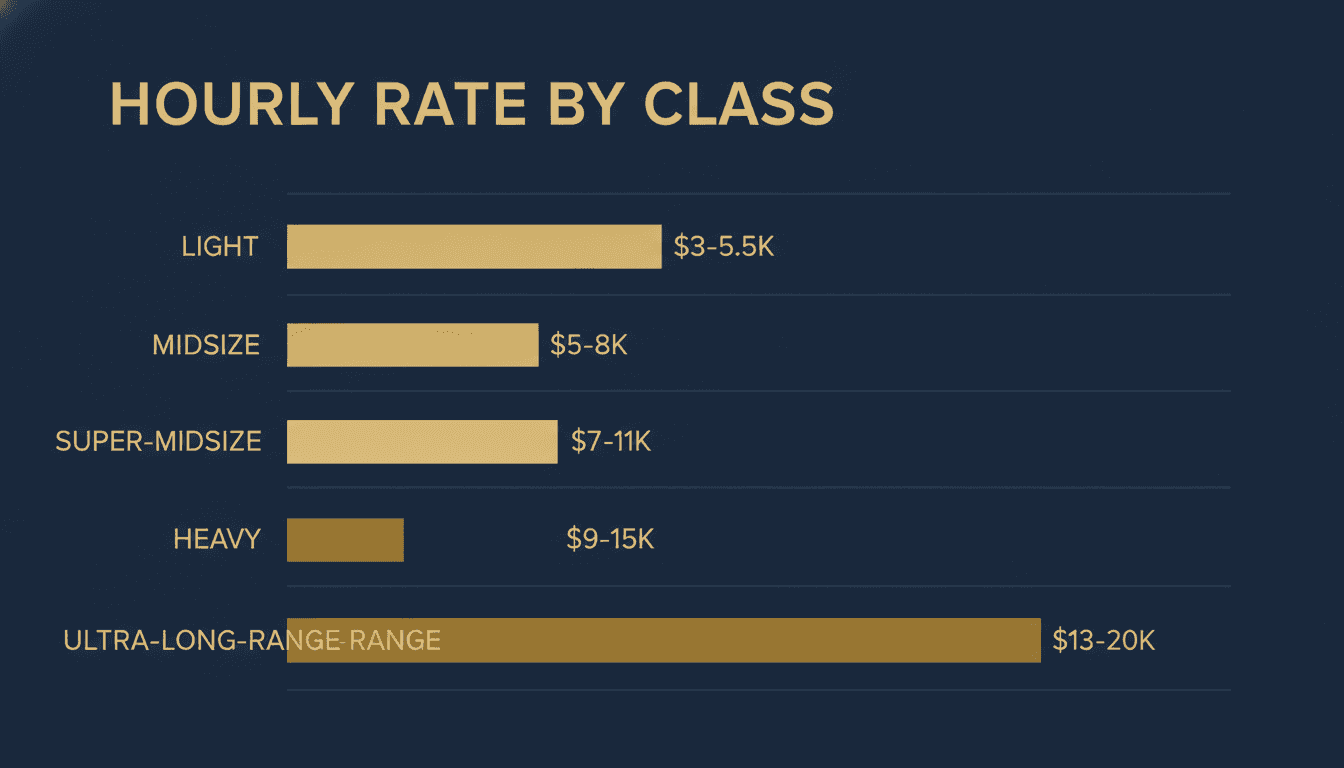
An at-a-glance comparison of capacity and hourly-rate bands across the five private jet classes. Choosing the class that fits your party and distance lets you fly the same mission more sensibly.
Frequently Asked Questions
How many private jet classes are there? Generally five: light, midsize, super-midsize, heavy, and ultra-long-range. Capacity, range, and hourly rate differ by class.
Which class is best for a short hop like Seoul–Jeju? A light jet is the most economical. It seats 5–7 and is optimized for short routes.
What are the hourly rates by class? At 2026 levels, roughly $3,000–$5,500 for a light jet up to $13,000–$20,000 for an ultra-long-range jet. Exact figures depend on route and schedule and are confirmed by quote.
Is there cost beyond the hourly rate? Positioning (ferry) legs, wait/overnight, landing and handling fees, peak surcharges, and taxes may be added depending on route and schedule.
Should a larger party always pick a bigger class? Distance and baggage matter too. Weighing party size, distance, and onboard use together is the key to optimizing cost.
Conclusion — Understand the Classes, and Private Jets Get Simple
Chartering a private jet isn't complicated. It starts with understanding the differences between the five classes and matching one to your party, route, and onboard needs. From the economy of a light jet to the intercontinental nonstop reach of an ultra-long-range jet, each class has a clear role. What matters is not the biggest jet, but the class that best fits your mission. As an independent consultancy unbound by any single carrier, Air Charter Korea handles everything from class recommendation to competing quotes.
If your party size and route are set, reach out using the contacts below. We'll match the right class and competing quotes to your mission, without delay.
✈️ Request a Charter Quote — Air Charter Korea
Get an aircraft-class recommendation and tailored quote matched to your party and route.
📞 Wonjin Choi +82-10-7723-3177 | ✉️ contact@aircharterkorea.com
🛬 Book Incheon VIP Meet-and-Greet — BestTurn
From immigration to baggage to your car on arrival — a seamless meet-and-greet (optional add-on).
📞 Steve (Team Lead) +82-10-3721-2853 | ✉️ service@bestturnaround.com | See VIP service details
Written by · Wonjin Choi — Victor x AirCharterService Korea Agent
Profile: LinkedIn | Air Charter Korea company page
Published · June 15, 2026