How to Book a Private Jet from Korea: The Definitive Guide to Private Jet Booking in 2026

How to Book a Private Jet from Korea: The Definitive Guide to Private Jet Booking in 2026
April 2026 | Air Charter Korea Editorial Desk
Private jet booking shouldn't feel like a black box. Yet for most people searching for a private jet from South Korea, that's exactly what it is — a frustrating loop of "request a quote" buttons, stock photos of leather interiors, and zero substantive information about how the process actually works. The global charter market has crossed $35 billion in annual value. Asia-Pacific is the fastest-growing region. And Korea sits at the center of that acceleration. But the information infrastructure hasn't kept pace with the demand.
This guide fixes that. Whether you're booking a private jet for the first time or looking to sharpen your approach after a few charters, what follows is a step-by-step breakdown of the entire private jet booking process from South Korea — from scoping your mission to wheels-up at Gimpo's FBO.

Contents
What Private Jet Booking Actually Means
Who Books Private Jets from Korea
The Terminology You Need Before Your First Booking
How to Book a Private Jet from Korea in 5 Steps
Choosing the Right Aircraft for Your Mission
What Private Jet Booking Really Costs
Gimpo and Incheon: Understanding Korea's FBO Infrastructure
Broker vs. Operator vs. App: Choosing Your Booking Channel
The 15-Point Private Jet Booking Checklist
Empty Legs: How to Book a Private Jet at Half the Price
Memberships vs. On-Demand: Which Booking Model Fits
Carbon and Conscience: ESG in Private Aviation
K-Bleisure: Where Business Travel Meets Private Jet Leisure
The State of Private Jet Booking in Korea — and What's Next
Frequently Asked Questions
Book Your Private Jet with Air Charter Korea
What Private Jet Booking Actually Means
Private Jet, Charter Jet, Business Jet — Let's Get the Vocabulary Right
The terminology around private aviation is genuinely confusing, and getting it wrong at the inquiry stage leads to mismatched expectations down the line. Here's how the industry actually uses these terms.
A private jet, strictly defined, is an aircraft owned and registered to an individual or corporation for their exclusive use. In South Korea, the list of entities that actually own business jets is vanishingly small — Korean Air, SK Group, Hyundai Motor Group, and a handful of others. If someone in Seoul tells you they "fly private," they almost certainly mean they charter.
A charter jet is the model where you rent an aircraft and its crew on a per-trip basis. No ownership, no hangar fees, no long-term commitments. This is how the overwhelming majority of private flying in Korea works, and it's what most people mean when they say "private jet booking."
A business jet is the umbrella industry term for aircraft engineered specifically for corporate and VIP travel — Gulfstream, Bombardier, Dassault, Embraer, Textron (Cessna/Beechcraft). The phrase covers everything from four-seat Very Light Jets to Boeing BBJ airliners configured for heads of state.
Throughout this guide, we use "private jet booking" to encompass all three. For a deeper dive into market terminology and Korea-specific nuances, see our Insider's Guide to Private Jet Charter from South Korea.
The Three Pillars of Private Jet Booking: Time, Privacy, Flexibility
Every private jet booking, at its core, is a purchase of three things.
Time. Commercial air travel from Seoul burns an average of two-plus hours just getting from the curb to your seat — check-in queues, security screening, gate transfers, boarding groups. Private jet booking compresses that to 15–30 minutes at the FBO. Executives who fly 400+ hours per year can reclaim the equivalent of 2.5 months of productive working time through private aviation. That's not marketing hyperbole — it's arithmetic.
Privacy. M&A negotiations, sensitive legal counsel, celebrity travel logistics, diplomatic movements — these scenarios demand a closed environment. Private jet booking guarantees that passenger manifests stay confidential, cabin conversations remain unmonitored, and the paparazzi problem disappears.
Flexibility. Commercial flights operate on the airline's schedule. Private jet booking inverts that equation — the aircraft works around yours. Departure time changes, midpoint stops, destination switches — all standard operating procedure in charter aviation.
We explore these advantages in greater detail in Private Jet Charter Benefits: What the Industry Gets Right.
Who Books Private Jets from Korea
C-Suite Executives and Business Owners
A CEO who needs to hit Seoul, Tokyo, and Shanghai in 36 hours doesn't have a commercial itinerary that works. Private jet booking turns dead travel time into working hours and eliminates the connection risk that can blow up a tightly packed deal schedule. The ROI isn't abstract — it's measured in meetings kept and decisions made on time.
For aircraft recommendations tailored to executive travel patterns, see our 2026 Executive Guide to Choosing the Right Jet for Business Travel.
Entertainment and K-Pop Industry
Korea's entertainment sector is one of the largest consumers of private jet booking services in Asia. World tours, overseas filming schedules, global fan events — the logistics of moving artists, managers, stylists, security teams, and equipment across continents demand the control that only chartered aviation provides. Group charters on VIP airliners are standard for major K-pop acts.
Premium Leisure Travelers
Family vacations, golf expeditions, honeymoons, anniversary trips — the leisure segment of private jet booking is growing fastest among Korea's UHNW and HNW populations. Pet-friendly cabins, custom catering, and the ability to land at smaller regional airports closer to resort destinations are driving adoption.
For more on traveling with pets, read The Exotic Jet Pet Revolution.
Medical Evacuations and Emergency Transport
When a patient needs urgent repatriation or a time-sensitive organ transport requires airborne logistics, private jet booking becomes a lifeline. On-demand charter services capable of launching within 24 hours serve this critical niche.
The Terminology You Need Before Your First Booking
Walk into any private jet booking conversation without knowing these terms and you'll be at a disadvantage when the quote arrives.
Key Private Jet Booking Terms, Decoded
FBO (Fixed Base Operator) — The private aviation terminal. At Gimpo Airport, the Business Aviation Center is Korea's primary FBO. It's a completely separate facility from the commercial terminals, with dedicated parking, VIP lounges, private immigration processing, and vehicle-to-aircraft transfers.
On-Demand Charter — Booking a private jet on a per-trip basis, with no membership or annual commitment. This is the most common form of private jet booking in Korea.
Empty Leg — A repositioning flight where the aircraft flies without passengers — typically returning to home base after dropping off a client. Booking an empty leg can save 50–75% off standard charter rates.
Positioning Fee — The cost of flying the aircraft from its current location to your departure airport. If the jet you've booked is parked in Hong Kong and you need it at Gimpo, that ferry flight costs money.
Handling Fee — Ground services at the arrival or departure airport: fueling, parking, crew support, customs facilitation.
Overnight Charges — When the aircraft waits for you at the destination, parking fees and crew hotel costs accumulate. Multi-day trips always include this line item.
For a detailed walkthrough of how to read and compare charter quotes, see our Transparency Guide for Comparing Private Jet Charter Quotes.
How to Book a Private Jet from Korea in 5 Steps
Private jet booking from South Korea follows a repeatable process. Master these five steps and you'll navigate any charter — first-time or fiftieth — with confidence.
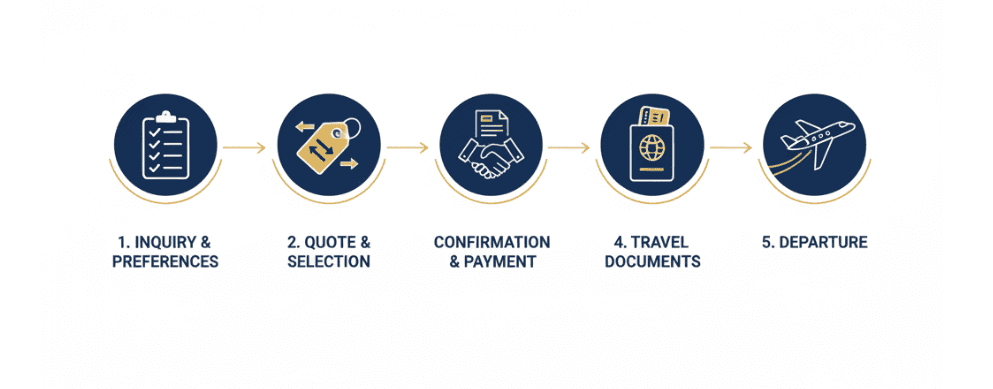
Step 1: Define Your Mission
Every private jet booking starts with five data points: departure city, destination city, travel dates, passenger count, and trip type (one-way or round-trip). Add to that any special requirements — oversized luggage (golf bags, film equipment), in-flight catering preferences, pet accommodation, Wi-Fi needs — and you've given your broker or operator everything they need to match you with the right aircraft.
The distance between your origin and destination determines the aircraft category. Seoul to Tokyo fits comfortably in a light jet. Seoul to Dubai requires a heavy. Getting this wrong means either overpaying for more aircraft than you need or discovering mid-process that your jet can't make the route nonstop.
Contact Air Charter Korea's advisory team with your requirements and expect a tailored aircraft-and-pricing proposal within 48 hours.
Step 2: Receive and Compare Quotes — Get at Least Three
The single most important principle in private jet booking is competitive quoting. The same route on the same date can vary by tens of thousands of dollars depending on the operator, aircraft, and availability window.
When quotes arrive, check each one for these line items: base flight cost, positioning fees, landing and handling fees, overnight charges, taxes and fuel surcharges, catering costs, and ground transportation. The critical question: is this an all-in quote or are some of these items billed separately?
Our 2026 Charter Quote Transparency Guide walks through the comparison methodology in detail.
Step 3: Confirm the Aircraft and Sign the Agreement
Once you've compared quotes and selected your preferred option, the booking moves into the contract phase. The Charter Agreement is a binding document, and before you sign, confirm these non-negotiables: the operator's AOC (Air Operator's Certificate) is current and valid, the specific aircraft's maintenance history and age, passenger liability and third-party insurance limits, the cancellation and amendment policy, and payment terms (most charter operators require full payment or a significant deposit before departure).
Working with an independent broker means this due diligence is handled on your behalf. Learn more about Air Charter Korea's advisory model.
Step 4: Pre-Flight Preparation
With the contract signed, the pre-flight logistics begin. Passport details for all passengers must be submitted to the operator (typically 48–72 hours before departure). Visa requirements for the destination country should be confirmed. Catering orders — including dietary restrictions and special menus — have deadlines, usually 24–48 hours out. Ground transportation at both ends (airport pickup vehicles) needs to be arranged. And you'll want the FBO's exact location and access instructions — Gimpo's Business Aviation Center is not in the same area as the commercial terminals.
Step 5: The FBO Experience — Arrive 15 Minutes Early, Not 2 Hours
On departure day, you arrive at the FBO — not the commercial terminal. At Gimpo, that means pulling up to a dedicated building, walking into a private lounge, and having immigration processed while you wait in comfort. A vehicle then takes you directly to the aircraft stairs. No security queues. No gate changes. No boarding groups.
The same VIP workflow applies on arrival. You deplane directly into a private facility, clear customs through a dedicated channel, and step into a vehicle that's already waiting.
Choosing the Right Aircraft for Your Private Jet Booking
There is no "best" private jet. There is only the right one for a given mission. Aircraft selection in private jet booking hinges on three variables: how far you're going, how many people are flying, and what you're willing to spend.
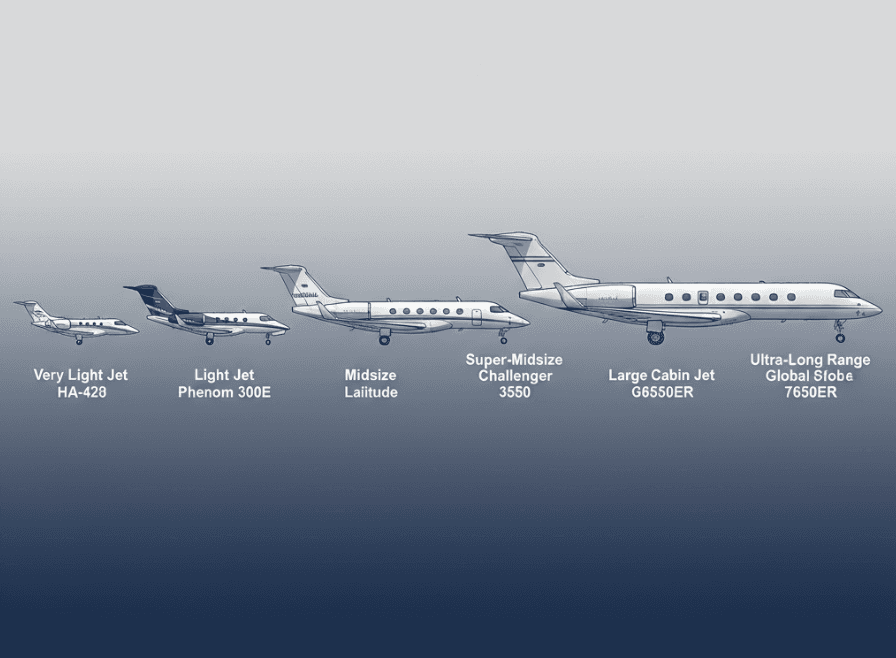
Very Light Jets — Domestic and Near-International
Honda Jet Elite, Cessna Citation M2. Seats 4–6, range 1,500–2,500 km. Perfect for Gimpo–Jeju, Gimpo–Busan, Seoul–Osaka. The lowest-cost entry point for private jet booking. Cabin space is limited, but on sub-90-minute flights, that's a non-issue.
Light Jets — Northeast Asia's Business Workhorse
Embraer Phenom 300E, Cessna Citation CJ3+. Seats 6–8, range 3,000–3,700 km. Seoul–Tokyo, Seoul–Shanghai, Seoul–Taipei — the highest-volume international corridors for Korean business travelers all fall within light-jet range. The Phenom 300E has become the go-to recommendation among Korean brokers for its balance of economics and cabin quality.
Midsize Jets — Southeast Asia and Pacific Routes
Cessna Citation Latitude, Hawker 800XP. Seats 7–9, range 4,000–5,500 km. This is where stand-up cabins begin — you can walk the aisle without ducking. Seoul–Bangkok, Seoul–Guam, Seoul–Singapore (some midsize jets reach this nonstop with favorable winds). The practical sweet spot for medium-haul private jet booking.
Super Midsize Jets — The Smart Long-Range Play
Bombardier Challenger 350, Gulfstream G280. Seats 8–12, range 5,500–6,700 km. If "value" exists anywhere in private aviation, it's in the super-mid category. Cabin dimensions approach heavy-jet territory at a materially lower hourly rate. From Seoul, this category covers India, parts of the Middle East, and northern Australia with one fuel stop.
Heavy / Long-Range Jets — Intercontinental Nonstop
Gulfstream G650ER, Bombardier Global 7500, Dassault Falcon 8X. Seats 12–19, range 10,000+ km. The only category that flies Seoul–New York, Seoul–London, or Seoul–Dubai nonstop. Full-flat beds, dedicated work suites, on some configurations an onboard shower. Not a luxury — a productivity tool for 12-hour flights.
VIP Airliners — Large-Group Charters
Boeing BBJ, Airbus ACJ319/320, Boeing 757 VIP. 50–100+ passengers. Built for K-pop world tours, corporate incentive trips, sports team charters, and government delegations.
For comprehensive aircraft comparisons by route, see our Korea Private Jet Charter Guide (2026).
What Private Jet Booking Really Costs
Private jet booking costs are not as simple as "hourly rate × flight time." Understanding the full cost structure is the difference between an informed purchase and a surprise invoice.
The Variables That Drive Your Quote
Flight time and distance — The largest line item. Hourly operating costs range from roughly $3,000–$5,000 for light jets, $5,000–$8,000 for midsize, and $8,000–$15,000+ for heavy jets (fuel included, 2026 estimates).
Positioning fees — If the aircraft isn't already at your departure airport, someone has to pay for the ferry flight to get it there. This "dead leg" can add 15–30% to the total cost and is the single most commonly overlooked item in private jet booking.
Landing, parking, and handling — Airport-specific charges that vary dramatically. Congested hubs like Tokyo Haneda or Hong Kong may carry slot acquisition fees on top of standard handling charges.
Crew costs — On one-way bookings, the crew's return positioning is often baked into the quote. Verify this.
Taxes and fuel surcharges — Fuel prices fluctuate with global crude markets, and surcharges adjust accordingly.
For route-specific pricing analysis, see Private Jet Rental Prices for Business Travel to Korea.
Estimated Private Jet Booking Costs from Seoul (2026, One-Way)
These are approximate ranges based on market conditions. Actual quotes will vary by aircraft, date, and availability.
Seoul (GMP/ICN) → Tokyo Haneda: Light jet, approximately $25,000–$40,000. Seoul → Shanghai: Light jet, approximately $30,000–$45,000. Seoul → Bangkok: Midsize jet, approximately $50,000–$80,000. Seoul → Singapore: Super midsize, approximately $70,000–$120,000. Seoul → Honolulu: Heavy jet, approximately $180,000–$300,000. Seoul → New York: Ultra-long-range, approximately $300,000–$500,000+.
For a precise quote tailored to your itinerary, contact Air Charter Korea directly.
Gimpo and Incheon: Understanding Korea's FBO Infrastructure
Gimpo Business Aviation Center
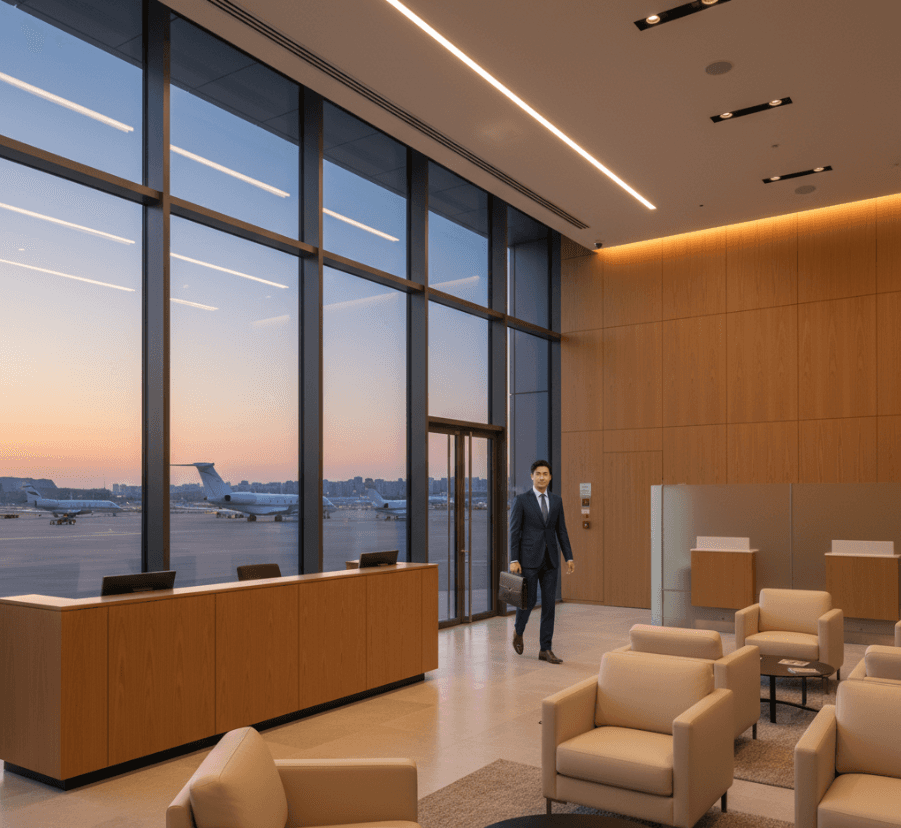
The vast majority of private jet bookings from Seoul depart through Gimpo Airport's Business Aviation Center — a standalone facility entirely separate from the commercial terminals. It offers dedicated parking, VIP lounges, a private immigration desk, and vehicle-to-aircraft tarmac transfers.
Gimpo's defining advantage is proximity. It's roughly 30 minutes from Gangnam and 15 minutes from Yeouido — saving more than an hour of ground time compared to Incheon International. The trade-off: Gimpo operates under a curfew, so late-night departures may need to route through Incheon instead.
Incheon International Airport
Incheon handles private jet operations as well, and for long-haul international bookings, it's often the more practical departure point. FBO facilities at Incheon continue to expand as Korea's private aviation market grows.
For details on airport VIP escort services, visit the Air Charter Korea homepage.
Broker vs. Operator vs. App: Choosing Your Booking Channel
There are three ways to book a private jet from Korea. Each has structural advantages and limitations.
Independent Brokers
Companies like Air Charter Korea operate independently of any single fleet operator. An independent broker searches the entire global market — hundreds of operators, thousands of aircraft — to find the option that best matches your requirements on safety, schedule, and budget.
The core advantage is objectivity. An operator will naturally recommend their own aircraft first. A broker's only loyalty is to the client. Brokers also handle the safety vetting, insurance verification, and contract review that most individual clients aren't equipped to do themselves.
Learn more about Air Charter Korea's independent advisory model.
Direct Operator Booking
Going directly to an operator — Korean Air BizJet, VistaJet, VONAER — gives you fast availability confirmation on their specific fleet. The limitation: you're only seeing what that one operator has available, not the full market.
App-Based Platforms
Digital platforms like XO, Jettly, and JetApp offer instant quoting and mobile booking convenience. They're strong on speed and user experience but may lack the depth of safety due diligence and bespoke service that high-value private jet bookings demand.
Which Channel Should You Use?
For occasional travelers booking one or two special trips per year, an independent broker delivers the best combination of market access, safety assurance, and personalized service. For ultra-frequent flyers logging 100+ hours annually, a direct operator membership may offer superior economics. Most first-time private jet bookers are best served by starting with a broker.
The 15-Point Private Jet Booking Checklist
Whether it's your first private jet booking or your fiftieth, run through these 15 items every time.
Before You Inquire
One — departure city, arrival city, dates, and passenger count are locked down. Two — one-way or round-trip, and if round-trip, how long are you staying. Three — luggage volume and any oversized items (golf clubs, camera equipment, musical instruments). Four — cabin service requirements: catering style, Wi-Fi needs, pet accommodation. Five — destination country entry requirements: visas, health documentation, customs declarations.
When Reviewing Quotes
Six — confirm the quote is all-inclusive: positioning, handling, taxes, and surcharges included. Seven — verify the operator's AOC and current insurance certificates. Eight — request the aircraft's manufacturing year and recent maintenance log summary. Nine — read the cancellation and amendment policy in full. Ten — obtain at least three competing quotes before committing.
Before Departure
Eleven — confirm the FBO's exact location and driving directions. Twelve — submit all passenger passport details to the broker or operator. Thirteen — finalize catering orders before the cutoff deadline. Fourteen — arrange ground transportation at the destination airport. Fifteen — save the broker's and operator's 24/7 emergency hotline numbers.
Empty Legs: How to Book a Private Jet at Half the Price
What Is an Empty Leg?
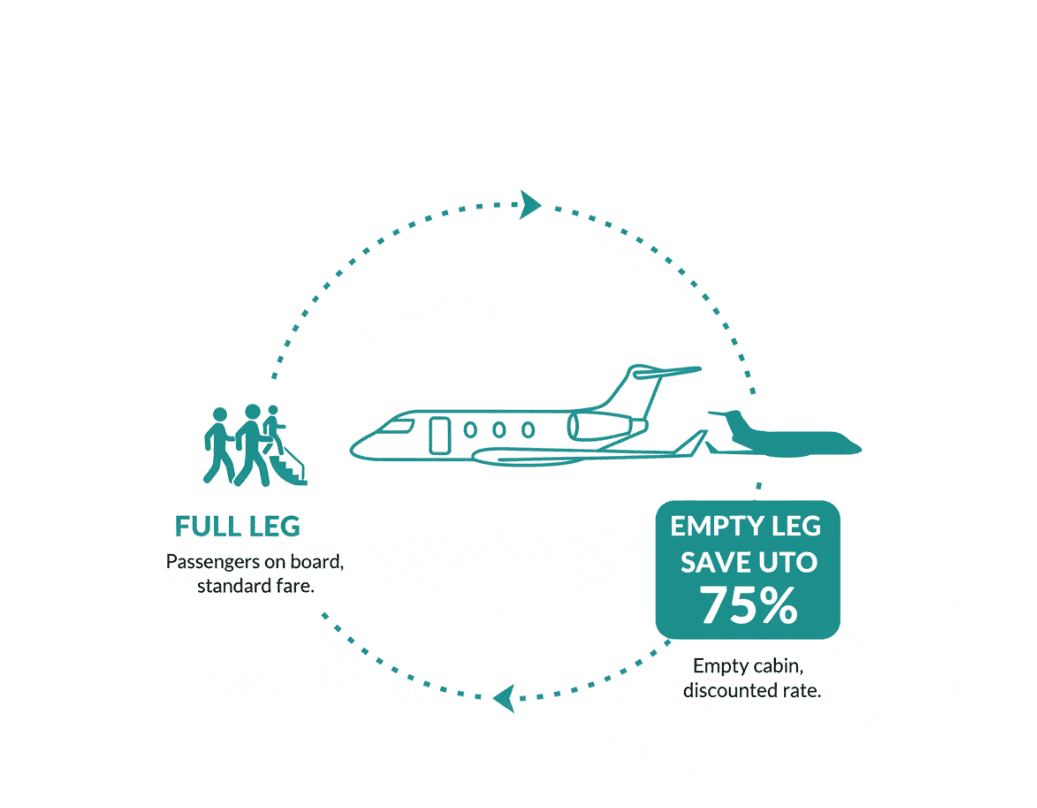
An empty leg is a repositioning flight — the aircraft flying without passengers from where it dropped off its last client to its next pickup point or home base. If your schedule happens to align with an available empty leg, private jet booking costs drop by 50–75%.
How to Find Empty Legs from Korea
Intra-Asia empty legs are less frequent than in the US or European markets, but they're growing steadily as business aviation traffic in Northeast and Southeast Asia increases. The key is flexibility. When you reach out to Air Charter Korea with your private jet booking inquiry, mention that your dates and destination have some flex — our team will flag matching empty leg opportunities as a priority.
The Caveats
Empty legs are tethered to the primary booking. If the original client changes their schedule, your flight may shift or cancel. Cancellation policies tend to be stricter than standard bookings. Empty legs work best for leisure travel where schedule flexibility is high. For time-critical business travel, the risk usually isn't worth the discount.
Memberships vs. On-Demand: Which Booking Model Fits
On-Demand Charter
Pay per trip, no upfront commitment. The most straightforward form of private jet booking and the right choice for anyone flying fewer than 50 hours per year.
Jet Cards
Prepurchase a block of flight hours — typically 25-hour increments — at a fixed hourly rate. Jet cards offer cost predictability and often guaranteed availability within a defined notice window. Best suited for travelers logging 50–100 hours annually.
Operator Memberships
Programs like VistaJet's subscription or Korean Air BizJet's annual membership provide priority access to a dedicated fleet with concierge-level service. The trade-off is substantial upfront cost and multi-year commitments. Only makes economic sense above 100 flight hours per year.
Fractional Ownership
Purchasing a share (1/16 to 1/2) of a specific aircraft. Common in the US and Europe, still nascent in Korea. Delivers the benefits of ownership without the full financial and operational burden.
Not sure which model fits your travel profile? Air Charter Korea's independent advisory team can run a comparative analysis based on your actual flight patterns — with no allegiance to any single operator.
A full cost breakdown between membership and on-demand models is available in our Private Jet Membership vs. Charter Cost Analysis.
Carbon and Conscience: ESG in Private Aviation
Sustainability has entered the private jet booking conversation — and it's not leaving. Here's where the industry stands.
Carbon Offset Programs
Most major operators now offer voluntary carbon offsetting on a per-flight basis. The mechanism: your emissions are calculated based on route distance and aircraft type, then neutralized through verified carbon credit purchases. It's an add-on to your private jet booking cost, typically in the range of 1–3% of the total flight price.
Sustainable Aviation Fuel (SAF)
SAF can reduce lifecycle carbon emissions by up to 80% compared to conventional jet fuel. Supply chains are expanding across Asia-Pacific, and some FBOs now offer SAF as a booking option. Availability is still limited but accelerating.
For Air Charter Korea's sustainability initiatives, see Green Corridor: ESG Consulting for Private Aviation.
K-Bleisure: Where Business Travel Meets Private Jet Leisure
K-Bleisure — Korea's premium twist on the global bleisure trend — is reshaping how executives think about private jet booking. The concept: extend a business trip by a day or two, pivot from the boardroom to a golf resort or wine region, and use the same private jet booking to do it seamlessly.
Private aviation makes this frictionless because you're not locked into hub-to-hub commercial routes. After an investor meeting in Tokyo, fly directly to Karuizawa for a round of golf. Close a deal in Singapore, then hop to Bali for the weekend. The aircraft goes where you go.
Read the full trend analysis in K-Bleisure: The Rise of Korea's Premium Travel Fusion.
The State of Private Jet Booking in Korea — and What's Next
2026: A Market at Its Inflection Point
Five years ago, private jet booking from Seoul was a chaebol affair. Today, the client base has broadened dramatically: K-pop agencies managing global tour logistics, unicorn founders running multi-city investor roadshows, small groups pooling resources for premium leisure trips. The supply side has responded — VONAER, BLUESHIFT, Air Charter Service, VistaJet, and PJS Group have all established or expanded Korean operations alongside Korean Air BizJet.
For a look at which global corporations are leveraging private jet charters, see Top Corporations Using Private Jet Charters in 2026.
UAM and the Future of Private Jet Booking
Urban Air Mobility — eVTOL aircraft operating from downtown vertiports — will eventually solve private aviation's "last mile" problem. Imagine boarding an air taxi in Gangnam, landing at Gimpo's FBO ten minutes later, and stepping directly onto your chartered jet. That's the K-UAM integration scenario for the 2030s, and it will fundamentally change how private jet booking works in Korea.
Deep analysis of this convergence is available in Why K-UAM Cloud-to-Curb Integration Is Redefining Korean Luxury Travel.
Frequently Asked Questions
How far in advance should I book a private jet?
Most private jet bookings can be confirmed 48–72 hours before departure. During peak periods — year-end holidays, major international events — booking 1–2 weeks ahead is advisable to lock in your preferred aircraft. Emergency medical evacuations can launch within 24 hours.
What documents do I need to book a private jet?
Passports for all passengers (valid for at least six months), destination-country visas where applicable, and the signed Charter Agreement. International routes may require additional customs documentation.
Can I bring my pet on a private jet?
Absolutely — and it's one of the biggest draws of private jet booking. Dogs, cats, even larger breeds that would be forced into cargo holds on commercial flights can travel in the cabin with you. Just confirm destination quarantine requirements and aircraft-specific policies in advance.
What's the most effective way to reduce private jet booking costs?
Four strategies, in order of impact: leverage empty legs when schedule flexibility allows, book during off-peak periods, obtain at least three competitive quotes, and work with an independent broker who searches the full market rather than a single fleet.
Which airports in Korea support private jet departures?
Gimpo International Airport (Business Aviation Center) and Incheon International Airport are the primary departure points. Yangyang, Gimhae (Busan), and Jeju airports also accommodate private jets, though FBO infrastructure and slot availability vary.
I've never booked a private jet before. Where do I start?
Contact Air Charter Korea. Share your travel dates, passenger count, and approximate budget range, and our advisory team will come back with a curated set of aircraft and routing options. The initial consultation is complimentary, with zero obligation.
Book Your Private Jet with Air Charter Korea
Air Charter Korea is South Korea's first independent private aviation consulting firm. We don't operate aircraft. We don't represent any single fleet. We work exclusively on your side — sourcing, vetting, and negotiating the best private jet booking for your specific mission, from any qualified operator worldwide.
Our advisory team is available 24/7, 365 days a year.
Get in touch: Email: contact@aircharterkorea.com Phone: +82-10-7723-3177 Request a Quote
Your next flight doesn't have to look like every flight before it.
This article was produced by the Air Charter Korea editorial desk and is intended as an independent informational resource on private aviation from South Korea. Cost estimates reflect 2026 market conditions and will vary based on aircraft type, routing, timing, and availability. For a binding quote, contact Air Charter Korea directly.